Executive Summary
In the landscape of modern perimeter security, the “Tire Killer” stands as one of the most definitive and high-deterrence solutions for vehicle access control. Unlike passive barriers that merely signal a restricted zone, a tire killer is an active, aggressive security measure designed to physically incapacitate any vehicle attempting unauthorized entry. For security professionals and facility managers, understanding the technical nuances, operational mechanics, and strategic deployment of these systems is critical for building a robust defense-in-depth architecture.
This article provides a deep dive into the engineering behind tire killers, exploring their various configurations, integration capabilities, and the critical role they play in high-stakes environments. We will move beyond basic definitions to examine the strategic “why” and “how” that make these devices indispensable in the modern B2B security sector.
—
Defining the Tire Killer: More Than Just a Barrier
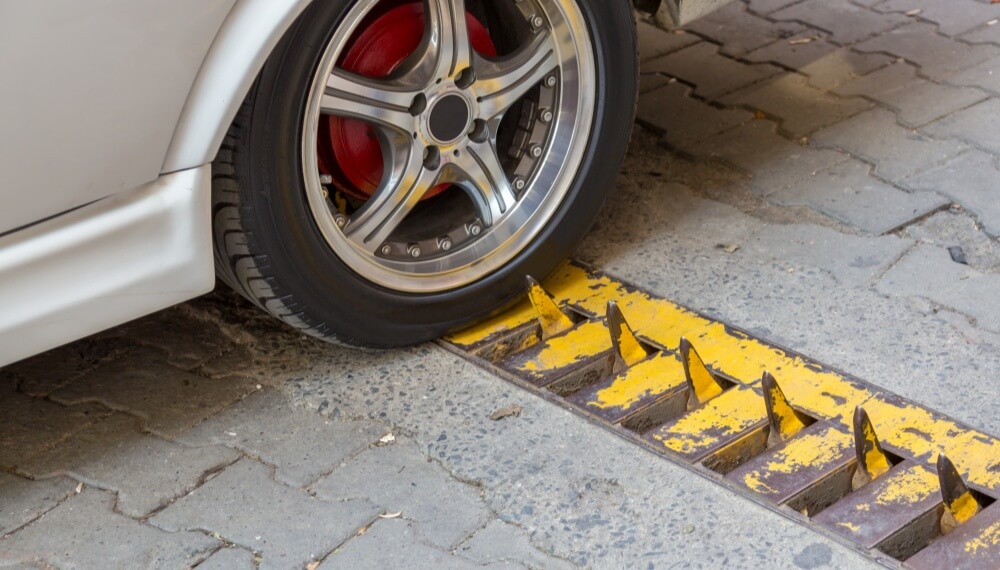
At its core, a tire killer is a heavy-duty security device consisting of a series of high-strength steel spikes or blades that can be raised to puncture the tires of an approaching vehicle. In the hierarchy of Vehicle Access Control (VAC), it occupies a unique position. While bollards and road blockers are designed to stop a vehicle’s momentum through sheer mass and impact resistance, a tire killer focuses on disabling the vehicle’s mobility.
The Anatomy of a Professional Tire Killer
A high-spec tire killer is not merely a row of spikes. It is a precision-engineered system comprising several key components:
- The Spike Assembly: Typically manufactured from high-grade carbon steel or stainless steel, these spikes are designed with specific angles and lengths to ensure they can penetrate even reinforced, run-flat, or heavy-duty commercial tires.
- The Drive Mechanism: This is the heart of the system, which can be hydraulic, electromechanical, or manual. It determines the speed of deployment and the frequency of operation (cycles) the unit can handle.
- The Housing (Trough): The steel structure that is either surface-mounted or embedded into the roadway. It must be capable of withstanding the axle load of heavy trucks (often rated up to 40-80 tons).
- The Control Logic: The electronics that interface with external sensors, remote controls, and broader building management systems (BMS).
—
How It Works: The Mechanics of Deterrence
The operational cycle of a tire killer is a study in speed and reliability. In a typical “active” security posture, the spikes remain in the raised position, forming a formidable visual and physical deterrent.
The Deployment Process
1. Detection: A vehicle approaches the checkpoint. The system is triggered via RFID, ANPR (Automatic Number Plate Recognition), or manual authorization by a security officer.
2. Verification: The control system verifies the vehicle’s credentials.
3. Retraction: Upon authorization, the drive mechanism (hydraulic or electric) pulls the spikes down into the housing. This usually happens in under 2 seconds for high-performance models.
4. Passage: The vehicle crosses safely.
5. Reset: Once sensors (loop detectors or photocells) confirm the vehicle has cleared the unit, the spikes automatically return to the raised position.
The Impact Event
If a vehicle attempts to “run” the barrier while the spikes are up:
* The spikes are angled toward the direction of the threat.
* As the tire rolls over, the spikes pierce the tread and sidewall.
* The design of the spike often includes a hollow core or a specific “hook” shape that ensures the tire is not just punctured but effectively shredded, preventing the vehicle from maintaining high speeds or maneuverability.
—
Categorization by Drive Mechanism: Choosing the Right Power
Selecting the right drive mechanism is perhaps the most critical decision in the procurement process. Each has distinct advantages depending on the site’s traffic volume and security requirements.
| Drive Type | Best For | Advantages | Considerations |
| **Hydraulic** | High-traffic, High-security | Extremely fast, high duty cycle, handles heavy loads | Requires hydraulic oil maintenance, higher initial cost |
| **Electromechanical** | Medium-traffic, Commercial | Clean (no oil), energy-efficient, easier maintenance | Slower than hydraulic, lower duty cycle |
| **Manual (Spring)** | One-way traffic control | Low cost, no power required, simple installation | Not suitable for reversible traffic control |
The Hydraulic Advantage
For critical infrastructure like embassies or military bases, hydraulic tire killers are the gold standard. They offer the highest “MTBF” (Mean Time Between Failures) and can operate continuously in extreme weather conditions. The power of hydraulic fluid allows for a “fast-up” emergency function, where the spikes can be raised in less than a second if a threat is detected.
—
Strategic Integration: The “System” Approach
A tire killer is only as effective as the system it is integrated into. In a professional B2B environment, these devices never operate in isolation.
The Multi-Layered Defense (The “Air-Lock” Principle)
One of the most effective strategies is the Interlocking Barrier System. Here, a tire killer is paired with a boom barrier or a sliding gate.
* The Boom Barrier serves as the primary traffic regulator (the “soft” barrier).
* The Tire Killer serves as the secondary enforcement (the “hard” barrier).
The logic is programmed so that the boom barrier only opens *after* the tire killer has fully retracted. This prevents accidental damage to authorized vehicles and ensures that even if a vehicle rams the boom barrier, it will be stopped by the tire killer.
Integration with Modern Tech
- ANPR Integration: Automatically lowering the spikes for whitelisted license plates.
- Under-Vehicle Surveillance Systems (UVSS): While the vehicle is stopped for the tire killer, cameras scan the chassis for explosives or contraband.
- Loop Detectors: Magnetic sensors in the road that prevent the spikes from rising while a vehicle is still on top of the unit, preventing accidental damage.
—
Engineering for Longevity: Installation and Maintenance
A tire killer is a significant investment, and its lifespan depends heavily on the quality of the civil works during installation.
The Importance of Drainage
The most common cause of tire killer failure is water ingress. Since the housing is embedded in the ground, it acts as a natural collection point for rainwater.
- Professional Insight: A high-quality installation *must* include a dedicated drainage pipe connected to the local sewage or a soakaway pit. In areas with high water tables, an automatic sump pump may be required within the tire killer pit.
Maintenance Schedules
To maintain a 99.9% uptime, a quarterly maintenance schedule is recommended:
- Visual Inspection: Checking for bent spikes or debris in the trough.
- Lubrication: Ensuring all pivot points and bearings are greased.
- Hydraulic Check: Testing fluid levels and checking for hose leaks.
- Sensor Calibration: Testing the loop detectors to ensure they are sensing vehicles correctly.
—
The “One-Way” Tire Killer: A Specialized Solution
While most discussions focus on bidirectional controlled access, the one-way mechanical tire killer is a brilliant piece of engineering for specific applications like exit-only lanes in parking garages or car rental lots.
These units use a spring-loaded mechanism. When a vehicle passes in the “correct” direction, the weight of the tire simply pushes the spikes down. Once the tire passes, the spikes spring back up. However, if a vehicle tries to enter from the “wrong” direction, the spikes remain rigid and puncture the tires. This provides a zero-energy, low-maintenance solution for preventing “wrong-way” entry.
—
Comparative Analysis: Tire Killer vs. Road Blocker vs. Bollard
A common question in B2B procurement is: *Which one do I need?* The answer lies in the type of threat you are mitigating.
| Feature | Tire Killer | Road Blocker | Bollard |
| **Primary Goal** | Disable mobility | Stop momentum | Pedestrian-friendly stopping |
| **Impact Rating** | Low (non-crash rated) | High (K12/PAS68) | High (K12/PAS68) |
| **Visual Impact** | Moderate (Warning) | High (Imposing) | Low (Aesthetic) |
| **Installation** | Shallow to Medium | Deep | Deep |
| **Cost** | Mid-range | High | High (per unit) |
The Original Perspective: Many security consultants mistakenly view the tire killer as a “budget” road blocker. This is a tactical error. The tire killer’s value isn’t just in its price; it’s in its psychological impact. A driver might think they can ram through a gate, but the sight of sharp steel spikes creates an immediate “stop” reflex. It is a more effective deterrent for “soft” threats than a hidden road blocker.
—
Safety Considerations: Protecting the Innocent
Because tire killers are aggressive by nature, safety protocols are paramount to avoid liability and accidental damage.
Essential Safety Features:
1. Traffic Lights: A Red/Green LED signal is mandatory. Drivers must have a clear visual cue when it is safe to proceed.
2. Safety Loops: Dual-loop systems ensure the spikes cannot rise if any part of the vehicle is still over the unit.
3. Manual Override: In the event of a power failure, a manual hand pump (for hydraulic) or a mechanical release (for electric) must be available to lower the spikes for emergency vehicles.
4. Audible Alarms: A siren that sounds while the spikes are in motion can alert nearby pedestrians.
—
Global Standards and Certifications
When sourcing a tire killer, looking for “CE” marking is the baseline. However, for high-security applications, one should look for manufacturers who perform internal “dynamic load tests.” While tire killers aren’t typically “crash-rated” in the same way bollards are (because their goal isn’t to stop a 7-ton truck dead in its tracks), they should be tested to ensure the spikes don’t shear off under the weight of a heavy vehicle passing at speed.
—
Future Trends: Smart Tire Killers
The next generation of tire killers is moving toward IoT integration. Imagine a system that:
* Sends a real-time alert to the facility manager’s smartphone if a “puncture event” occurs.
* Predicts maintenance needs based on cycle counts and motor temperature.
* Integrates with cloud-based security platforms to provide a unified view of all entry points across multiple global sites.
—
Conclusion: The Strategic Choice for Your Facility
In the complex world of B2B security, the tire killer remains a cornerstone of effective vehicle access control. It provides a definitive, high-deterrence solution that is both cost-effective and operationally efficient. Whether you are protecting an industrial warehouse, a corporate headquarters, or a high-security government facility, the tire killer offers a level of “active” protection that passive barriers simply cannot match.
By understanding the technical requirements—from hydraulic power to drainage systems—and integrating these devices into a broader security strategy, organizations can create a formidable defense that ensures only authorized vehicles gain entry, while effectively neutralizing any vehicular threat before it can reach the inner perimeter.
—
About the Author: This article was prepared by a specialist in perimeter security solutions, focusing on the engineering and strategic deployment of advanced vehicle access control systems for the global market.
—
Technical Deep Dive: Materials Science and Durability
The effectiveness of a tire killer is inextricably linked to the metallurgy of its spikes. In a professional setting, not all steel is created equal.
High-Carbon Steel vs. Stainless Steel
- High-Carbon Steel: Most industrial-grade tire killers utilize high-carbon steel for the spikes. This material offers the necessary hardness to penetrate radial tires without bending. However, it requires a robust anti-corrosion treatment, such as hot-dip galvanization or specialized epoxy coating, to withstand environmental exposure.
- Stainless Steel: For coastal installations or environments with high salt exposure, 304 or 316-grade stainless steel is preferred. While more expensive, it eliminates the risk of rust, which could seize the mechanism over time.
The Engineering of the Spike Tip
A common misconception is that the spikes should be razor-sharp. In reality, a “needle-point” tip is prone to breaking. Professional manufacturers design spikes with a “diamond-cut” or “chisel-tip” geometry. This design ensures that the spike can handle the immense vertical pressure of a vehicle’s weight while still maintaining the lateral strength required to “catch” and tear the tire as the vehicle moves forward.
—
Installation Best Practices: A Civil Engineering Perspective
The failure of a tire killer is rarely a failure of the motor; it is almost always a failure of the installation. For B2B projects, the following civil engineering standards must be met:
Foundation Depth and Concrete Grade
The “trough” of the tire killer must be encased in high-strength concrete (typically C30/37 grade or higher). Because the unit will experience constant “pounding” from passing vehicles, the concrete foundation must be deep enough to distribute this load into the subsoil. A minimum of 500mm of reinforced concrete surrounding the unit is standard for heavy-duty applications.
Managing Thermal Expansion
In regions with extreme temperature fluctuations, the steel housing of the tire killer will expand and contract. If the installation does not account for this, the housing can warp, causing the spikes to jam. Professional installers use expansion joints and specific flexible sealants between the steel unit and the surrounding concrete to accommodate this movement.
—
Case Study Scenarios: Applying Tire Killer Logic
To better understand the “original viewpoint” on tire killer deployment, let’s examine three distinct scenarios:
Scenario A: The High-Security Logistics Hub
A global logistics provider needs to prevent “tailgating” (where an unauthorized vehicle follows an authorized truck through a gate).
- Solution: A hydraulic tire killer is installed 5 meters behind the main sliding gate.
- Logic: The tire killer remains up even when the gate is open. It only lowers once the specific truck’s RFID tag is read. If a second vehicle tries to follow, the spikes rise immediately after the first truck’s rear axle clears the safety loop, effectively “trapping” or disabling the intruder.
Scenario B: The Unmanned 24/7 Self-Storage Facility
A facility requires a low-cost, high-reliability way to ensure vehicles only exit through the exit gate.
- Solution: A mechanical, spring-loaded “one-way” tire killer.
- Logic: This eliminates the need for expensive sensors or a control room. It is a “set and forget” solution that provides physical enforcement of traffic flow without increasing the facility’s electricity bill.
Scenario C: The Corporate Headquarters in an Urban Center
A facility needs security but wants to maintain a “welcoming” aesthetic.
- Solution: A flush-mounted electromechanical tire killer integrated with a decorative boom barrier.
- Logic: By using a flush-mount design, the tire killer is nearly invisible when retracted. It only becomes a visual deterrent during high-alert levels or after hours. This balances the need for “hard” security with the corporate desire for an open, non-militarized appearance.
—
The Hidden Cost of Low-Quality Imports
In the B2B procurement cycle, the temptation to opt for the lowest-priced unit is high. However, the “Total Cost of Ownership” (TCO) of a low-quality tire killer can be astronomical.
- Spike Shearing: Cheap units often use cast iron or low-grade steel. Under the stress of a heavy truck, these spikes can shear off, leaving the facility unprotected and creating a debris hazard.
- Motor Burnout: Non-industrial motors often lack the duty cycle required for busy entry points, leading to failure within the first 6 months.
- Seal Failure: In hydraulic units, low-quality seals will leak oil into the ground, creating environmental liabilities and requiring expensive soil remediation.
—
Conclusion: Building a Resilient Future
The tire killer is more than a piece of hardware; it is a statement of security intent. As vehicle-borne threats continue to evolve, the demand for reliable, high-performance access control will only grow. By focusing on quality materials, strategic integration, and rigorous maintenance, facility managers can ensure that their tire killer remains a silent, steadfast guardian of their perimeter.
For the modern enterprise, the question is no longer *if* you need vehicle access control, but *how* robust you want that control to be. The tire killer provides the definitive answer to that question, offering a level of physical certainty that few other security technologies can match.