
Introducción
In the sophisticated hierarchy of Vehicle Access Control (VAC), the Tire Killer stands as a definitive, high-deterrence instrument of physical security. Unlike passive barriers that merely signal a boundary or soft barriers like boom gates that regulate traffic flow, a tire killer is an active, aggressive security measure designed to physically incapacitate any vehicle attempting unauthorized entry or exit.
For security professionals and facility managers, understanding the strategic “why” and technical “how” of tire killers is essential for building a robust defense-in-depth architecture. This article provides an in-depth exploration of the engineering principles, psychological deterrence, and operational integration that make tire killers an indispensable component of modern perimeter protection.
The Engineering Principles of Tire Killers
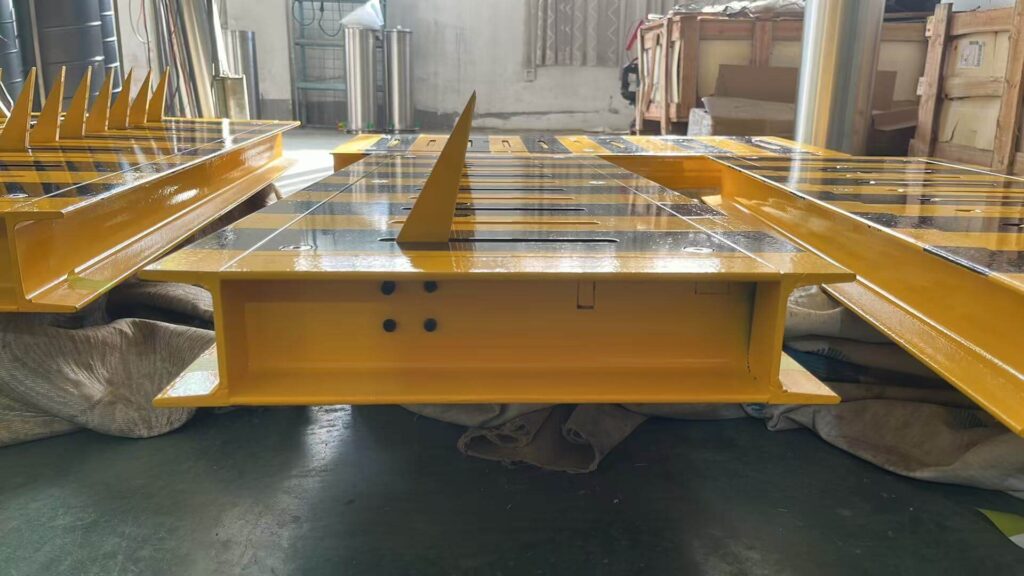
At its core, a tire killer is a heavy-duty security device consisting of a series of high-strength steel spikes or blades that can be raised to puncture the tires of an approaching vehicle. While its goal—stopping a vehicle—is shared with bollards and road blockers, its mechanical approach is fundamentally different.
Disablement vs. Momentum Neutralization
While a crash-rated road blocker stops a vehicle through sheer mass and impact resistance (momentum neutralization), a tire killer focuses on disabling the vehicle’s mobility. By destroying the tires, the tire killer removes the vehicle’s ability to maintain traction, steering control, and high-speed movement.
The Anatomy of the Spike Assembly
A professional-grade tire killer is a precision-engineered system comprising several key components: * The Spikes: Typically manufactured from high-tensile carbon steel or stainless steel, these spikes are designed with specific angles (usually 45 to 60 degrees) and lengths (150mm to 450mm) to ensure they can penetrate even reinforced, run-flat, or heavy-duty commercial tires. * The Housing (Trough): The steel structure that is either surface-mounted or embedded into the roadway. It must be capable of withstanding extreme axle loads, often rated up to 40-80 tons, ensuring the system’s integrity when heavy trucks pass over it. * The Drive Mechanism: This is the heart of the system, which can be hydraulic, electromechanical, or manual. It determines the speed of deployment—often as fast as 1 to 2 seconds—and the frequency of operation (duty cycle) the unit can handle.
How Tire Killers Function: The Operational Cycle
The effectiveness of a tire killer lies in its rapid response and reliability. In a typical active security posture, the spikes remain in the raised position, forming a formidable visual and physical deterrent.
1. Detection and Verification
As a vehicle approaches the checkpoint, the system is triggered. This can occur through various inputs: * RFID and Long-Range Readers: For automated access of authorized fleet vehicles. * ANPR (Automatic Number Plate Recognition): Identifying whitelisted license plates. * Manual Authorization: Controlled by a security officer from a remote cabin or central control room.
2. Retraction and Passage
Upon successful verification, the drive mechanism (hydraulic or electric) pulls the spikes down into the housing. For high-performance models, this retraction occurs in under 2 seconds. Once sensors (loop detectors or photocells) confirm the vehicle has cleared the unit, the spikes automatically return to the raised position.
3. The Impact Event: Mechanical Destruction
If a vehicle attempts to “run” the barrier while the spikes are up, the interaction is one of surgical destruction. The spikes are angled toward the direction of the threat. As the tire rolls over, the spikes pierce the tread and sidewall.
Professional-grade spikes often feature a hollow core or a specific “V-shape.” This design ensures that the tire is not just punctured but effectively shredded, causing rapid and total air discharge. Without air pressure, the tire loses its structural integrity, and the vehicle is brought to a stop, unable to maintain the speed or maneuverability required for a successful breach.
Psychological Deterrence: The Invisible Barrier
Beyond its mechanical capabilities, the tire killer provides a powerful psychological deterrent. In security consulting, the “perceived risk” to an intruder is often as important as the actual physical barrier.
The “Stop” Reflex
A driver might believe they can ram through a wooden arm gate or even a light-duty sliding gate. However, the sight of sharp, cold steel spikes creates an immediate “stop” reflex. The certainty of vehicle damage is a more effective deterrent for “soft” threats—such as opportunistic intruders or unauthorized commuters—than a hidden or less aggressive-looking road blocker.
Clear Visual Signaling
To be effective as a deterrent, tire killers must be accompanied by clear visual cues. This includes: * High-Visibility Coatings: Spikes are often painted in “safety yellow” or “traffic red.” * LED Indicators: Red/Green traffic lights that signal to authorized drivers when it is safe to proceed. * Warning Signage: Explicitly stating that unauthorized entry will result in tire damage.
Integration: The “System” Approach to Security
A tire killer is most effective when it is integrated into a broader, multi-layered security ecosystem. In a professional B2B environment, these devices never operate in isolation.
The Interlocking “Air-Lock” Strategy
One of the most effective deployment strategies is pairing a tire killer with a “soft” barrier, such as a boom gate. * The Boom Gate serves as the primary traffic regulator, stopping vehicles for credential checks. * The Tire Killer serves as the secondary, “hard” enforcement.
The system logic is programmed so that the boom gate only opens after the tire killer has fully retracted. This “interlock” prevents accidental damage to authorized vehicles while ensuring that if a vehicle rams the boom gate, it is immediately neutralized by the tire killer.
Advanced Technological Integration
Modern tire killers are “smart” devices that interface with: * UVSS (Under-Vehicle Surveillance Systems): While the vehicle is stopped for the tire killer, cameras scan the chassis for explosives or contraband. * Loop Detectors: Magnetic sensors in the road that prevent the spikes from rising while a vehicle is still on top of the unit—a critical safety feature to prevent liability and accidental damage. * BMS (Building Management Systems): Allowing global security operations centers (GSOC) to monitor the status and cycle counts of entry points across multiple sites.
Choosing the Right Drive Mechanism
The choice of drive mechanism is a critical technical decision that impacts both security levels and long-term maintenance costs.
| Drive Type | Best For | Advantages | Considerations |
| Hydraulic | High-traffic, High-security | Extremely fast, 100% duty cycle, handles heavy loads | Requires hydraulic oil maintenance |
| Electromechanical | Medium-traffic, Commercial | Clean (oil-free), energy-efficient, easier maintenance | Slower than hydraulic |
| Manual (Spring) | One-way traffic control | Zero power required, low cost, simple installation | Not suitable for reversible traffic |
The Hydraulic Advantage for Critical Infrastructure
For sites like embassies, military bases, or nuclear plants, hydraulic tire killers are the gold standard. They offer the highest “MTBF” (Mean Time Between Failures) and can operate continuously in extreme weather conditions. The power of hydraulic fluid allows for a “fast-up” emergency function, where the spikes can be raised in less than a second if a threat is detected.
Engineering for Longevity: Installation and Maintenance
A tire killer is a significant investment, and its lifespan depends heavily on the quality of the civil works during installation.
The Importance of Drainage
The most common cause of tire killer failure is water ingress. Since the housing is embedded in the ground, it acts as a natural collection point for rainwater. A professional installation must include a dedicated drainage pipe connected to the local sewage or a soakaway pit. Without proper drainage, standing water can lead to corrosion of the drive mechanism and failure of electronic limit switches.
Maintenance Schedules
To maintain a 99.9% uptime, a professional maintenance schedule should include: * Visual Inspection: Checking for bent spikes or debris (stones, trash) in the trough. * Lubrication: Ensuring all pivot points and bearings are greased to prevent friction and noise. * Hydraulic Check: Testing fluid levels and checking for hose leaks or pressure drops. * Sensor Calibration: Testing the loop detectors and photocells to ensure they are sensing vehicles and pedestrians correctly.
Strategic Use Cases: Where Tire Killers Excel
While tire killers are versatile, they are particularly effective in specific scenarios:
- Directional Enforcement: In car rental lots or parking garage exits, “one-way” mechanical tire killers prevent vehicles from entering through the exit lane without requiring any electrical power.
- Anti-Tailgating: In secure commercial office parks, tire killers can be timed to rise immediately after an authorized vehicle passes, preventing an unauthorized “tailgater” from following them through the gate.
- Space-Constrained Sites: Because tire killers can be surface-mounted or shallow-mounted (requiring only 200mm to 400mm of excavation), they are ideal for locations where underground utilities make deep-foundation road blockers impossible to install.
The Professional Viewpoint: Beyond the Spikes
When evaluating a tire killer manufacturer, professional buyers should look beyond the price and focus on the Total Cost of Ownership (TCO) and engineering quality.
A “professional” grade tire killer is defined by: * Material Science: Using heat-treated steel for the spikes to ensure they don’t shear off under the weight of a heavy vehicle. * Weatherproofing: Corrosion-resistant finishes (hot-dip galvanization) that can withstand extreme heat, rain, and road salt. * Safety Protocols: Compliance with international safety standards, including audible alarms and manual override capabilities for emergency vehicle access during power failures.
Future Trends: IoT and Predictive Maintenance
The next generation of tire killers is moving toward IoT integration. Future systems will feature: * Remote Diagnostics: Real-time monitoring of motor temperature and hydraulic pressure. * Predictive Maintenance: Algorithms that alert facility managers to potential issues before a failure occurs, based on cycle counts and sensor data. * Cloud-Based Control: Allowing for the remote “lockdown” of multiple global sites from a single secure dashboard.
Conclusión
The tire killer is more than just a row of spikes; it is a sophisticated, active defense system that combines mechanical power, rapid automation, and psychological deterrence. By neutralizing the vehicle’s mobility, it provides a definitive solution for preventing unauthorized entry in high-security and commercial environments.
For the modern security professional, the key to a successful tire killer implementation lies in choosing the right drive mechanism, ensuring professional installation (especially drainage), and integrating the device into a layered, “smart” security architecture. When these elements align, the tire killer offers an uncompromising level of protection that keeps facilities, assets, and personnel secure in an increasingly complex threat landscape.
As a leading manufacturer of high-security vehicle access control systems, we are committed to engineering excellence and innovation. Our tire killer solutions are designed to meet the most rigorous global standards, providing reliable, high-deterrence protection for critical infrastructure and commercial facilities worldwide.
Technical Deep Dive: The Mechanics of Spike Penetration
To fully appreciate the efficacy of a tire killer, one must examine the physics of the “impact event” at a granular level. The interaction between a high-tensile steel spike and a moving tire is a study in material stress and rapid energy dissipation.
The Geometry of Destruction
The angle of the spike is not arbitrary. Professional manufacturers typically set the angle between 45 and 60 degrees relative to the road surface. This specific inclination ensures that as the tire rolls forward, the spike’s tip is positioned to enter the tread at the optimal point of maximum pressure. If the angle were too vertical, the spike might simply be pushed down or cause the vehicle to bounce; if it were too horizontal, it might not achieve deep enough penetration to reach the tire’s inner liner.
Material Science: Why High-Tensile Steel Matters
The spikes must be manufactured from materials that exhibit both high hardness (to maintain a sharp point) and high toughness (to resist snapping under lateral force). Most premium tire killers utilize high-tensile carbon steel, often heat-treated to a specific Rockwell hardness. This ensures that even if a heavy-duty truck with reinforced sidewalls attempts a breach, the spikes will not bend. Furthermore, the base plate and hinge mechanisms must be equally robust, as they must transfer the lateral force of the moving vehicle into the concrete foundation without mechanical failure.
Safety and Liability: The Professional’s Responsibility
Because tire killers are aggressive by nature, their deployment carries significant safety and liability considerations. A professional installation is defined by its ability to protect the innocent while stopping the intruder.
Mandatory Safety Features
A “naked” tire killer without safety integration is a liability. A professional-grade system must include: 1. Safety Loop Detectors: These are inductive loops buried in the asphalt before and after the tire killer. They detect the presence of a vehicle’s metal mass. The system logic ensures that the spikes cannot rise if a vehicle is currently positioned over the unit, preventing accidental damage to authorized vehicles that might have stalled or stopped. 2. Traffic Light Synchronization: A Red/Green LED signal is not optional. It must be synchronized with the spike movement. The light should only turn green when the spikes are fully retracted and locked in the down position. 3. Audible Alarms: For sites with high pedestrian traffic, an audible siren or buzzer that sounds while the spikes are in motion provides an essential warning. 4. Emergency Manual Override: In the event of a total power failure, there must be a way to lower the spikes for emergency services (fire, ambulance). In hydraulic systems, this is usually a manual hand pump; in electromechanical systems, it is a mechanical release key.
Civil Works: The Foundation of Security
The effectiveness of a tire killer is only as good as the concrete it is bolted into. A common mistake in procurement is underestimating the importance of civil engineering.
Foundation Depth and Reinforcement
Even for shallow-mount tire killers, the concrete foundation must be of a specific grade (typically C30/37 or higher) and reinforced with steel rebar. This foundation acts as the “anchor” that prevents the entire unit from being ripped out of the ground if a heavy vehicle strikes it. For in-ground models, the pit must be excavated to a depth that allows for both the unit housing and a sufficient layer of reinforced concrete beneath it.
Environmental Protection: Galvanization and Coatings
Since tire killers are installed in the road, they are subject to the harshest environmental conditions: standing water, road salt, oil leaks, and extreme temperature fluctuations. To prevent the system from becoming a “rust bucket” within two years, professional manufacturers utilize Hot-Dip Galvanization (HDG). This process involves submerging the entire steel frame in molten zinc, creating a metallurgical bond that provides decades of corrosion protection. For aesthetic purposes, this can be followed by a high-durability powder coating in safety colors.
Total Cost of Ownership (TCO) Analysis
When presenting a security project to stakeholders, focusing on the initial purchase price is a tactical error. A professional analysis focuses on the Total Cost of Ownership (TCO) over a 10 to 15-year lifecycle.
Initial Investment vs. Operational Costs
While a hydraulic tire killer has a higher upfront cost than a manual spring-loaded version, its TCO in a high-traffic environment is often lower. Manual systems in high-traffic areas suffer from rapid spring fatigue and mechanical wear, leading to frequent parts replacement and downtime. In contrast, a well-maintained hydraulic system can handle hundreds of thousands of cycles with minimal intervention.
The Cost of Downtime
In a high-security facility, a broken gate is a security breach. The TCO analysis must include the “cost of failure.” Choosing a manufacturer with a proven track record, available spare parts, and a design that allows for “modular” repairs (where individual spikes can be replaced without removing the entire unit) is critical for minimizing long-term operational risk.
Conclusion: A Definitive Defense
The tire killer remains one of the most effective and definitive tools in the arsenal of vehicle access control. By combining the cold logic of mechanical destruction with the sophisticated automation of modern control systems, it provides a level of security that is both visible and absolute.
For the modern facility manager, the tire killer is not just a piece of equipment; it is a statement of security intent. It says that unauthorized access is not merely “discouraged” but physically “impossible.” By prioritizing engineering quality, professional installation, and smart integration, organizations can ensure that their perimeters remain secure against the evolving threats of the modern world.