Introdução
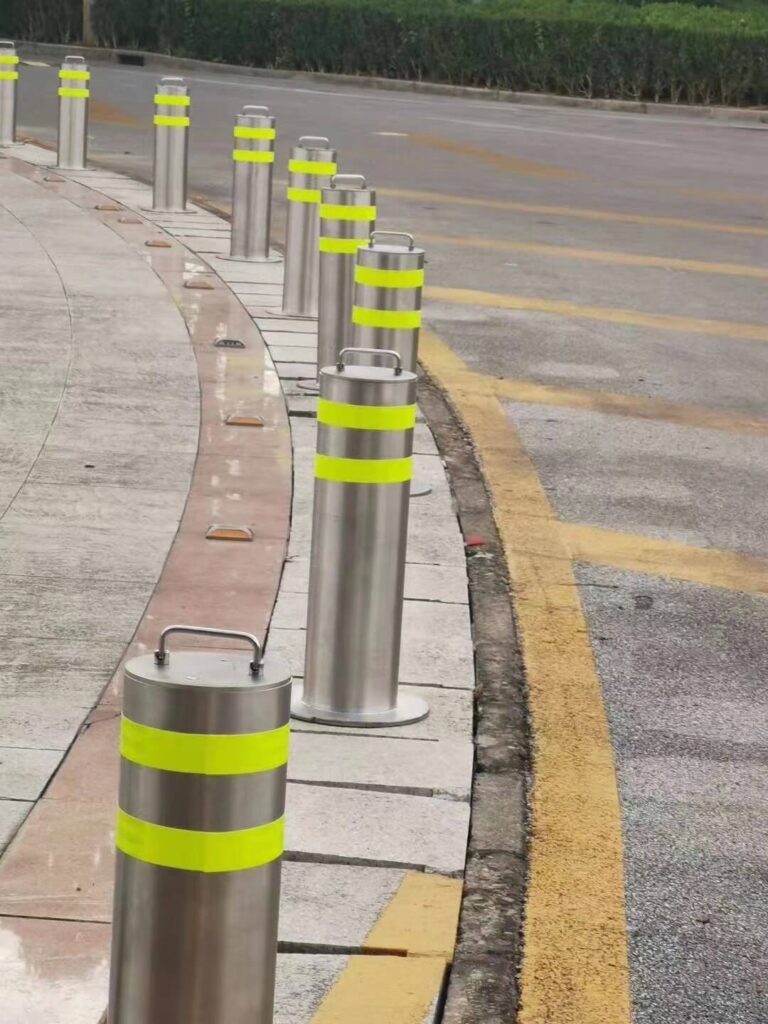
In an era where urban landscapes are becoming increasingly complex and the need for robust security measures is paramount, the integration of physical barriers into architectural and infrastructural design has never been more critical. Among the most effective and ubiquitous of these barriers are crash-rated bollards. These unassuming vertical posts, often seamlessly blended into the aesthetic of their surroundings, serve a profound purpose: they are engineered to stop moving vehicles, thereby protecting pedestrians, critical infrastructure, and property from both accidental collisions and intentional vehicular attacks.
The question, “What is a crash-rated bollard and why does it matter?” is not merely a technical inquiry; it is a fundamental consideration for urban planners, security professionals, facility managers, and architects. As the frequency of vehicle-ramming incidents—whether due to driver error, medical emergencies, or malicious intent—continues to rise globally, understanding the mechanics, standards, and applications of crash-rated bollards is essential for creating safe and resilient environments. This comprehensive guide delves into the intricate world of crash-rated bollards, exploring their definitions, the rigorous testing standards they must meet, their various types, and the profound reasons why their implementation is a non-negotiable aspect of modern security planning.
Understanding the Basics: What is a Crash-Rated Bollard?
At its core, a bollard is a short, sturdy vertical post. Historically, bollards were used for mooring ships at docks, but their application has evolved significantly over the centuries. Today, they are primarily used to guide traffic, mark boundaries, and protect perimeters. However, not all bollards are created equal. While decorative or standard traffic bollards may provide a visual deterrent or guide pedestrian flow, they offer little to no resistance against the kinetic energy of a moving vehicle.
A crash-rated bollard, on the other hand, is a highly specialized security device. It is specifically designed, engineered, and rigorously tested to withstand the impact of a vehicle traveling at a specified speed and carrying a specific weight. The primary objective of a crash-rated bollard is to arrest the forward momentum of an attacking or out-of-control vehicle, preventing it from penetrating a protected perimeter.
The engineering behind a crash-rated bollard is complex. It involves not just the strength of the bollard itself—typically constructed from high-grade steel and often filled with concrete—but also the integrity of its foundation. A crash-rated bollard is only as strong as the footing that anchors it to the ground. When a vehicle strikes the bollard, the kinetic energy is transferred from the vehicle to the bollard, and then dissipated into the foundation and the surrounding earth. If the foundation fails, the bollard fails, regardless of the strength of the post itself. Therefore, the term “crash-rated” applies to the entire system: the bollard, its internal reinforcement, and its engineered foundation.
The Evolution of Bollard Standards: From K-Ratings to ASTM
To understand the efficacy of crash-rated bollards, one must understand the standards by which they are measured. The landscape of crash testing has evolved significantly over the past few decades, driven by the changing nature of vehicular threats and the need for more precise and comprehensive testing methodologies.
The Legacy of the K-Rating System
The earliest standardized system for rating security barriers was developed by the United States Department of State (DOS) in 1985, and later revised in 2003. This system, known as the K-rating system, was primarily designed to protect diplomatic facilities from terrorist attacks involving vehicle-borne improvised explosive devices (VBIEDs).
The K-rating system tested barriers against a standard medium-duty truck weighing 15,000 pounds (6,800 kg). The ratings were based on the speed at which the barrier could stop the vehicle: * K4: Certified to stop a 15,000-pound vehicle traveling at 30 mph (48 km/h). * K8: Certified to stop a 15,000-pound vehicle traveling at 40 mph (64 km/h). * K12: Certified to stop a 15,000-pound vehicle traveling at 50 mph (80 km/h).
In addition to the K-rating, the DOS system included an “L” classification, which measured the penetration distance of the vehicle’s cargo bed past the barrier line. This was crucial because, in the context of a VBIED, the goal is to keep the explosive payload as far away from the protected structure as possible. The L-classifications were: * L3: Less than 3 feet (0.91 m) of penetration. * L2: 3 feet to 20 feet (0.91 m to 6.1 m) of penetration. * L1: 20 feet to 50 feet (6.1 m to 15.2 m) of penetration.
While the K-rating system was a pioneering effort and remains a recognizable shorthand in the security industry, it had limitations. It only tested one vehicle weight and did not account for the diverse range of vehicles that could pose a threat in civilian environments. Consequently, the industry moved toward more comprehensive standards.

The Modern Benchmark: ASTM F2656
Today, the gold standard for high-speed crash testing in the United States and many parts of the world is the ASTM F2656 standard, developed by ASTM International (formerly the American Society for Testing and Materials). This standard, titled “Standard Test Method for Crash Testing of Vehicle Security Barriers,” provides a much more nuanced and detailed framework for evaluating barrier performance.
Unlike the DOS K-rating system, ASTM F2656 tests barriers against a variety of vehicle types, ranging from small passenger cars to heavy goods vehicles. The most common test vehicle remains the 15,000-pound medium-duty truck (designated as “M”), but the standard also includes categories for small passenger cars (“C”), pickup trucks (“P”), and heavy goods vehicles (“H”).
The ASTM F2656 standard uses an “M-rating” system that corresponds directly to the test speeds used in the old K-rating system, but with more precise penetration measurements. The M-ratings for a 15,000-pound vehicle are: * M30: Stops a 15,000-pound vehicle at 30 mph. * M40: Stops a 15,000-pound vehicle at 40 mph. * M50: Stops a 15,000-pound vehicle at 50 mph.
The most significant improvement in the ASTM F2656 standard is its “P-rating” system for penetration. Instead of measuring the distance the cargo bed travels, ASTM measures the dynamic penetration of the vehicle’s leading edge (typically the bumper or engine block) past the inside edge of the barrier. This provides a more accurate assessment of the barrier’s ability to protect pedestrians and structures immediately behind it. The P-ratings are: * P1: Penetration of 3.3 feet (1.0 m) or less. * P2: Penetration between 3.31 feet and 23.0 feet (1.01 m to 7.0 m). * P3: Penetration between 23.1 feet and 98.4 feet (7.01 m to 30.0 m). * P4: Penetration greater than 98.4 feet (30.0 m).
Therefore, a bollard rated ASTM F2656 M50-P1 represents the highest level of protection, capable of stopping a 15,000-pound truck traveling at 50 mph with less than 3.3 feet of penetration.
Addressing Low-Speed Threats: ASTM F3016
While ASTM F2656 is essential for high-security environments facing high-speed threats, it does not adequately address the most common type of vehicular incident in urban and commercial settings: low-speed, accidental impacts. Every day, vehicles accidentally crash into storefronts, outdoor dining areas, and pedestrian walkways due to pedal confusion, driver impairment, or simple misjudgment.
To address this specific threat, ASTM International developed the ASTM F3016 standard, titled “Standard Test Method for Surrogate Testing of Vehicle Impact Protective Devices at Low Speeds.” This standard is specifically designed to evaluate the performance of bollards and barriers in protecting against vehicles traveling at 30 mph or less.
ASTM F3016 utilizes a 5,000-pound (2,268 kg) surrogate test vehicle, which represents a typical full-size pickup truck or SUV. The barriers are tested at three speeds: * S10: 10 mph (16 km/h) * S20: 20 mph (32 km/h) * S30: 30 mph (48 km/h)
The penetration ratings for ASTM F3016 are also more stringent, reflecting the need to protect pedestrians who may be standing immediately adjacent to the barrier: * P1: Penetration of 1 foot (0.30 m) or less. * P2: Penetration between 1.01 feet and 4 feet (0.31 m to 1.22 m).
For retail environments, public plazas, and areas where vehicles and pedestrians share close proximity, ASTM F3016-rated bollards provide the necessary assurance that an accidental pedal error will not result in a catastrophic tragedy.
International Standards: PAS 68 and IWA 14-1
While ASTM standards dominate the North American market, other regions rely on different testing protocols. Understanding these international standards is crucial for global security projects.
PAS 68 (Publicly Available Specification 68): Developed by the British Standards Institution (BSI), PAS 68 is the primary standard used in the United Kingdom and widely recognized throughout Europe and the Middle East. Like ASTM F2656, it tests barriers against various vehicle weights and speeds. However, PAS 68 is often considered more rigorous in its reporting, detailing not only the penetration distance but also the dispersion of major debris, which can be a significant secondary hazard in an explosion or high-speed crash.
IWA 14-1 (International Workshop Agreement 14-1): Developed by the International Organization for Standardization (ISO), IWA 14-1 was created to harmonize the various global standards, drawing heavily from both ASTM F2656 and PAS 68. It provides a globally accepted framework for evaluating vehicle security barriers, making it easier for multinational organizations to specify security requirements across different regions. IWA 14-1 uses a complex coding system to report the vehicle type, test speed, impact angle, and penetration distance.
Why Crash-Rated Bollards Matter: The Imperative of Protection
The technical specifications and testing standards of crash-rated bollards are impressive, but their true value lies in their real-world application. The question of “why it matters” can be answered by examining the diverse and critical roles these barriers play in safeguarding society.
1.Mitigating Hostile Vehicle Mitigation (HVM)
In recent years, the use of vehicles as weapons has become a favored tactic for terrorists and malicious actors. Vehicles are readily available, require no special training to operate, and can inflict massive casualties and structural damage in a matter of seconds. This tactic, known as a vehicle-ramming attack, has been used with devastating effect in cities around the world, from Nice and Berlin to New York and London.
Crash-rated bollards are the primary defense against Hostile Vehicle Mitigation (HVM). By establishing a hardened perimeter around critical infrastructure, government buildings, military installations, and crowded public spaces, these bollards physically prevent unauthorized vehicles from gaining access to vulnerable targets. In the event of an attempted attack, an M50-rated bollard will instantaneously arrest the vehicle’s momentum, neutralizing the threat and saving lives. The presence of such robust defenses also serves as a powerful psychological deterrent, forcing malicious actors to seek softer targets.
2.Preventing Accidental Storefront Crashes
While terrorist attacks capture headlines, accidental vehicle incursions are far more common and collectively cause significant property damage, injuries, and fatalities. According to the Storefront Safety Council, there are over 100 storefront crashes every day in the United States alone, resulting in thousands of injuries and hundreds of deaths annually.
These accidents are typically caused by driver error, such as pedal confusion (mistaking the gas pedal for the brake), medical emergencies, driving under the influence, or simple distraction. Retail stores, convenience stores, restaurants with outdoor seating, and commercial buildings located near busy intersections or parking lots are particularly vulnerable.
ASTM F3016 low-speed crash-rated bollards are specifically designed to address this pervasive threat. By installing these bollards along the perimeter of a storefront or pedestrian walkway, property owners can create an impenetrable shield that protects patrons and employees from out-of-control vehicles. This not only saves lives but also protects businesses from devastating liability claims, property damage, and operational downtime.
3.Protecting Critical Infrastructure
The uninterrupted operation of critical infrastructure—such as power plants, water treatment facilities, data centers, and transportation hubs—is essential for the functioning of modern society. These facilities are high-value targets for sabotage, vandalism, and terrorist attacks. A successful vehicular breach of a critical infrastructure site could have catastrophic cascading effects, disrupting essential services to millions of people.
High-speed crash-rated bollards (ASTM F2656) are a standard requirement for securing these facilities. They provide a robust physical barrier that prevents unauthorized vehicles from approaching sensitive areas, such as control rooms, fuel storage tanks, or critical communication nodes. By ensuring the physical integrity of the perimeter, crash-rated bollards play a vital role in maintaining national security and public safety.
4.Enhancing Pedestrian Safety in Urban Environments
As cities prioritize walkability and active transportation, the creation of pedestrian-only zones, public plazas, and shared spaces has become a central tenet of urban planning. However, the success of these spaces depends entirely on the safety of the pedestrians within them. When vehicles and pedestrians share close proximity, the risk of accidental or intentional collisions is ever-present.
Crash-rated bollards are the ideal solution for defining and protecting pedestrian zones. Unlike continuous walls or fences, bollards allow for the free flow of pedestrian and bicycle traffic while completely restricting vehicular access. They can be strategically placed at the entrances to pedestrian streets, around public squares, and along wide sidewalks to create safe havens where people can gather, socialize, and commute without the fear of vehicular intrusion.
5.Securing High-Profile Events
Large public gatherings, such as sporting events, concerts, festivals, and parades, present unique security challenges. The high concentration of people makes these events attractive targets for malicious actors, while the temporary nature of the event often precludes the use of permanent security infrastructure.
In these scenarios, removable or temporary crash-rated bollards are invaluable. These systems can be rapidly deployed to secure the perimeter of an event space, block off surrounding streets, and create safe pedestrian corridors. Once the event is over, the bollards can be removed, restoring normal traffic flow. This flexibility allows security professionals to provide maximum protection without permanently altering the urban landscape.

The Intersection of Security and Aesthetics
Historically, high-security barriers were often utilitarian and visually imposing, prioritizing function over form. Concrete Jersey barriers and heavy steel barricades, while effective, can create a fortress-like atmosphere that detracts from the aesthetic appeal of a building or public space.
However, the modern security industry recognizes that effective protection does not have to come at the expense of design. Today, crash-rated bollards are available in a wide variety of styles, materials, and finishes, allowing them to seamlessly integrate into any architectural context.
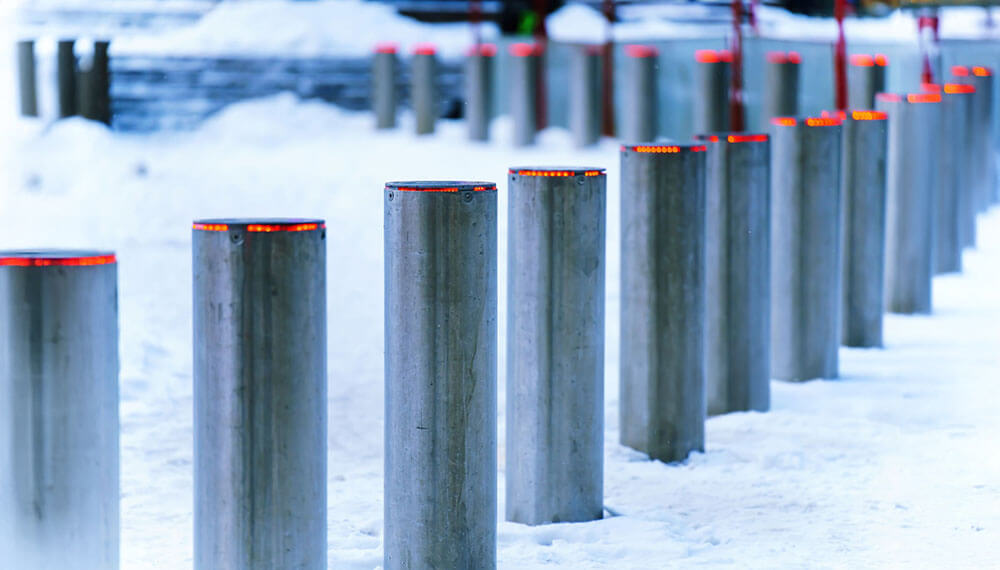
Many crash-rated bollards consist of a heavy-duty internal steel pipe that provides the stopping power, covered by a decorative sleeve. These sleeves can be made from stainless steel, cast iron, aluminum, or durable plastics, and can be customized with various colors, textures, and architectural details. Some bollards even incorporate LED lighting, serving a dual purpose as both a security barrier and a source of illumination for pedestrian pathways.
This integration of security and aesthetics is crucial for widespread adoption. By offering solutions that enhance rather than detract from the visual environment, architects and urban planners are more likely to incorporate crash-rated bollards into their designs, resulting in safer and more beautiful public spaces.
Installation: The Critical Component of Crash Rating
It is imperative to reiterate that a crash-rated bollard is a system, and the bollard itself is only one component of that system. The most robust M50-rated steel post is entirely useless if it is not installed correctly. The foundation is what absorbs and dissipates the massive kinetic energy of a vehicle impact.
Proper installation requires meticulous engineering and adherence to the manufacturer’s specifications. This typically involves excavating a significant trench, constructing a rebar cage, positioning the bollard, and pouring high-strength concrete. The depth and width of the foundation, the grade of the concrete, and the configuration of the rebar are all dictated by the specific crash rating and the soil conditions of the site.
Furthermore, the spacing between bollards is a critical factor. To effectively prevent vehicle access, the clear space between bollards must not exceed the width of the vehicles they are intended to stop. In the United States, the standard maximum spacing is typically 4 feet (1.2 meters), which is narrow enough to stop a small passenger car while still allowing for wheelchair accessibility in compliance with the Americans with Disabilities Act (ADA).
Because the installation process is so critical to the performance of the barrier, it must be carried out by experienced and certified professionals. A poorly installed crash-rated bollard provides a false sense of security, which can be more dangerous than having no barrier at all.
Conclusão
In conclusion, a crash-rated bollard is far more than a simple post in the ground. It is a highly engineered, rigorously tested security system designed to protect human life and critical infrastructure from the devastating impact of moving vehicles. Whether defending against a deliberate terrorist attack or a tragic pedal error, these barriers provide an essential layer of physical security in an increasingly unpredictable world.
Understanding the various testing standards—from ASTM F2656 for high-speed threats to ASTM F3016 for low-speed storefront protection—is crucial for selecting the right barrier for the right application. Furthermore, recognizing the importance of proper installation and the availability of aesthetically pleasing designs ensures that security measures can be implemented effectively without compromising the visual appeal of our urban environments.
As we continue to design and build the cities of the future, the integration of crash-rated bollards must be viewed not as an optional upgrade, but as a fundamental requirement. By prioritizing physical security and proactively mitigating vehicular threats, we can create public spaces, commercial environments, and critical facilities that are not only functional and beautiful but, above all, safe.