
Introcuction
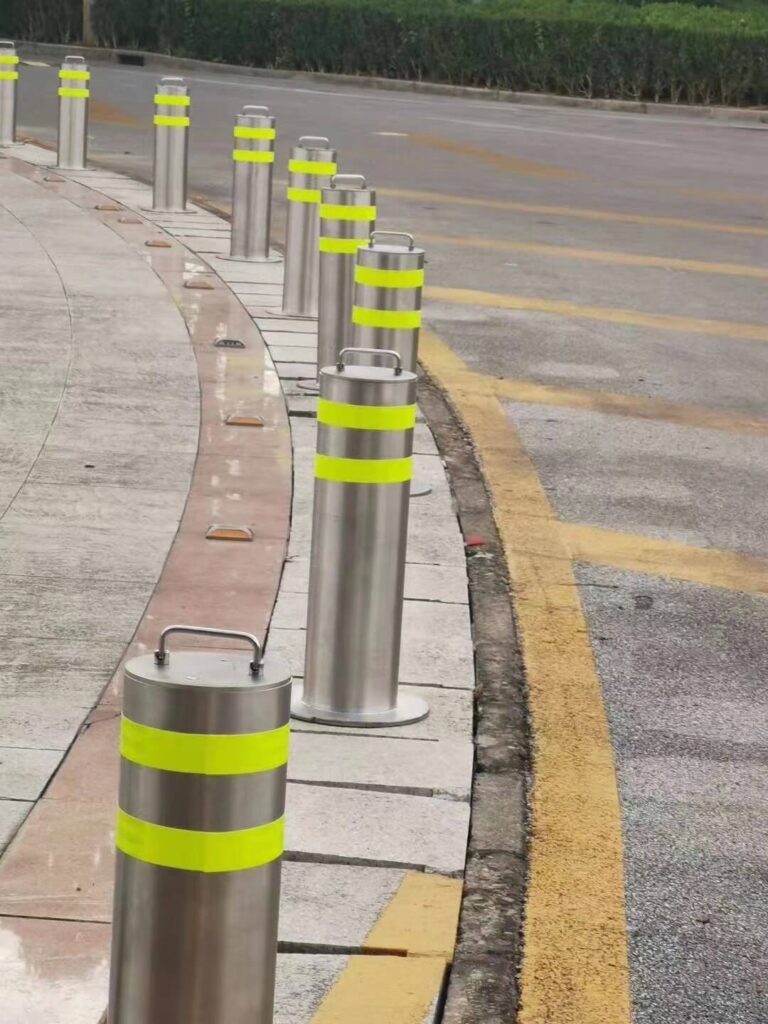
In the realm of perimeter security and urban design, bollards serve as silent sentinels, providing critical protection for pedestrians, infrastructure, and high-value assets. Whether they are designed to manage traffic flow, prevent accidental vehicle incursions, or mitigate hostile vehicle attacks, the effectiveness of a bollard is fundamentally tied to its installation. For facility managers, architects, and site engineers, selecting a high-quality bollard is only half the battle. The most sophisticated crash-rated bollard can fail catastrophically if the foundation is shallow, the spacing is incorrect, or the environmental factors are ignored.
This article provides an in-depth exploration of the technical pitfalls often encountered during bollard installation. By understanding these common mistakes, professionals can ensure that their security investments deliver the promised longevity, functionality, and safety.

Planning and Specification Errors: The Foundation of Success
The installation process begins long before the first hole is augured. Most failures can be traced back to the planning phase, where a lack of technical foresight leads to the selection of the wrong equipment or a failure to account for site-specific challenges.
Incorrect Bollard Type Selection
One of the most frequent errors is the mismatch between the bollard’s intended function and its actual specifications. Dissuasores are generally categorized into three functional groups: decorative, traffic control, and security (crash-rated). A common mistake is installing a decorative bollard in a high-risk area simply because it matches the site’s aesthetic. Decorative bollards, often made of lightweight aluminum or plastic, provide visual guidance but offer negligible resistance to vehicle impact. Conversely, installing heavy-duty crash-rated bollards in a pedestrian-only zone where no vehicle threat exists can lead to unnecessary costs and installation complexity.
Ignoring Site Conditions and Underground Utilities
A failure to conduct a thorough site survey is a recipe for disaster. Installers often overlook the complexity of the subsurface environment. Soil composition—whether it is sandy, clay-heavy, or rocky—significantly impacts the stability of the concrete foundation. For instance, “expansive soils” that swell when wet can exert upward pressure on a bollard foundation, leading to misalignment over time.
Furthermore, the “call before you dig” mantra is often ignored, resulting in accidental strikes on underground electrical conduits, gas lines, or fiber-optic cables. In urban environments, the density of utility lines can be so high that traditional deep-embedment bollards are impossible to install without costly utility relocation. In such cases, failing to pivot to shallow-mount bollard technology is a critical planning error.
Failure to Consult Local Codes and Regulations
Bollard installation is governed by a complex web of local building codes, fire safety regulations, and accessibility standards. A frequent mistake is failing to verify the required “clear width” for emergency vehicle access. If bollards are placed too close together, they may block fire trucks or ambulances, leading to legal liability and the potential need for a complete re-installation. Similarly, ignoring the Americans with Disabilities Act (ADA) or equivalent local accessibility standards can result in barriers that impede individuals with mobility aids, such as wheelchairs or walkers.
Foundation and Structural Mistakes: The Science of Resistance
The foundation is the most critical component of a bollard system. It is where the energy of a vehicle impact is transferred and dissipated into the earth. When the foundation is compromised, the entire security system is compromised.
Inadequate Foundation Depth and Diameter
The “lever principle” is the primary physics concept at play during a bollard impact. A bollard acts as a lever, with the impact point being the effort and the ground line being the fulcrum. If the portion of the bollard embedded in the ground is too shallow, the force of a vehicle impact will simply “pry” the bollard out of the earth.
A common technical error is using a “one-size-fits-all” approach to foundation depth. The required depth is a variable of the bollard’s height, the expected impact speed, and the soil’s load-bearing capacity. For non-crash-rated security bollards, a standard rule of thumb is that one-third of the total length should be below grade. However, for crash-rated systems (such as those meeting ASTM F2656 standards), the foundation design must strictly adhere to the manufacturer’s tested specifications. Deviating by even a few inches can invalidate the crash rating.

Improper Concrete Mix and Curing
Concrete is the literal glue of the installation, yet its chemistry is often treated as an afterthought. Two major mistakes occur here: using a mix with an incorrect water-to-cement ratio and failing to allow for proper curing time.
If the concrete mix is too “wet” or runny, it becomes easier to pour but significantly weaker once cured. High water content leads to increased porosity and a higher likelihood of shrinkage cracks. On the other hand, if the concrete is not vibrated correctly during the pour, air pockets (honeycombing) can form around the bollard’s base or reinforcement cage, creating weak points. Furthermore, rushing to put a bollard into service before the concrete has reached its design strength (typically 28 days for full strength, though 7 days is often sufficient for initial loading) can lead to premature foundation failure.
Neglecting Reinforcement (Rebar)
For high-security applications, the concrete foundation alone is often insufficient to resist the shear forces of a high-speed impact. The omission of a rebar cage is a critical structural mistake. Rebar provides the tensile strength that concrete lacks. In a professional installation, the rebar must be positioned with the correct “concrete cover” (the distance between the rebar and the edge of the concrete) to prevent moisture from reaching the steel and causing internal corrosion, which can lead to “concrete spalling” and eventual foundation disintegration.
Spacing and Alignment Blunders: Balancing Security and Accessibility
Once the foundation requirements are understood, the physical placement of the bollards becomes the next technical challenge. Spacing is not merely an aesthetic choice; it is a critical safety and security parameter.
Overly Wide Spacing
The primary objective of a security bollard array is to prevent vehicle penetration while allowing pedestrian flow. A frequent mistake is spacing bollards too far apart to save on costs or installation time. The industry standard for preventing the passage of a standard passenger vehicle is a maximum of 60 inches (5 feet) between the centers of the bollards. However, for higher security requirements where smaller, more maneuverable vehicles or motorcycles are a threat, this spacing may need to be reduced to 36 or 48 inches.
Failing to account for the “clear distance” between the outermost edges of the bollards is a common oversight. If the gap exceeds 5 feet, a determined driver can navigate a compact car through the line, rendering the entire installation moot. Engineers must calculate spacing based on the widest point of the bollard (including any decorative sleeves or covers) to ensure the gap remains secure.
Ignoring ADA and Accessibility Requirements
While security often calls for tighter spacing, accessibility laws require a minimum clear path for individuals with disabilities. In the United States, the Americans with Disabilities Act (ADA) typically requires a minimum of 36 inches of clear space between obstructions to allow for wheelchair passage.
A common blunder is installing a row of bollards with exactly 36-inch centers. Because the bollards themselves have a diameter (often 4, 6, or 8 inches), the “clear space” between them drops below the legal 36-inch requirement. This creates a barrier for wheelchair users and can lead to costly litigation or the forced removal of the bollards. A professional installation always balances the “5-foot rule” for security with the “3-foot rule” for accessibility, typically landing on a clear spacing of 36 to 48 inches.
Visual Misalignment and Poor Leveling
From a professional B2B perspective, the visual quality of an installation reflects the quality of the facility management. Bollards that are “leaning” or out of alignment with the building’s architecture are more than just an eyesore; they often indicate underlying structural issues.
A common mistake is “eyeballing” the alignment instead of using precision tools. On sloped surfaces, installers often struggle to keep the bollard perfectly vertical (plumb). If a bollard is installed at an angle, the internal stresses on the foundation are unevenly distributed, which can lead to premature cracking of the concrete. Using laser levels and transit levels is essential for ensuring that a long row of bollards remains perfectly straight and at a uniform height, especially when following the curve of a curb or the line of a storefront.
Drainage and Environmental Oversight: The Silent Killers
Even the most robustly installed bollard can be undone by the environment if proper precautions are not taken. Moisture is the primary enemy of any metal and concrete structure.
Failure to Provide Proper Drainage
For removable and collapsible bollards, which sit inside a ground sleeve, drainage is the single most important factor for longevity. A common and costly mistake is “dead-ending” the bollard sleeve in concrete without a path for water to escape.
When rain or snowmelt enters the sleeve, it collects at the bottom. If there is no drainage, the bollard sits in standing water, leading to rapid corrosion of the steel and the eventual failure of the locking mechanism. In colder climates, this standing water can freeze, expanding and potentially cracking the concrete foundation or “heaving” the bollard out of the ground. A professional installation requires a “French drain” style approach: the bottom of the sleeve should remain open, sitting on a bed of crushed stone or gravel that allows water to percolate into the soil. In some cases, a PVC drainage pipe should be integrated to direct water away from the foundation entirely.
Material Incompatibility and Corrosion
Choosing the wrong material or finish for the environment is a frequent error. For example, installing standard powder-coated carbon steel bollards in a coastal environment with high salt spray will lead to visible rust within months.
Another technical oversight is “galvanic corrosion,” which occurs when two dissimilar metals (such as an aluminum bollard and a steel mounting plate) come into contact in the presence of an electrolyte (moisture). Without a non-conductive buffer or proper coating, the more reactive metal will corrode at an accelerated rate. Professional installers must specify materials—such as 316-grade stainless steel for coastal areas or hot-dip galvanized coatings for industrial zones—that are suited to the specific micro-climate of the site.
Neglecting the Surface Seal
The interface between the bollard and the surrounding pavement is a critical entry point for water. A common mistake is failing to apply a high-quality, flexible sealant around the base of the bollard. Without this seal, water can seep into the gap between the concrete foundation and the asphalt or pavers, leading to “freeze-thaw” damage that degrades the surface and allows moisture to reach the rebar inside the foundation.

Mechanical and Technical Errors: The Complexity of Automation
As security needs evolve, many facilities are turning to automated hydraulic or electric bollard systems. These systems introduce a layer of mechanical and electrical complexity that significantly increases the margin for error during installation.
Improper Wiring and Power Supply
For automatic bollards, electrical errors are the leading cause of system failure. A frequent mistake is failing to account for “voltage drop” over long cable runs. If the power source is located far from the bollard array and the wire gauge is too thin, the motors or hydraulic pumps may not receive enough power to operate reliably, leading to sluggish movement or “stalling.”
Furthermore, the waterproofing of electrical conduits is often poorly executed. Installers may use standard indoor-grade connectors or fail to seal the ends of the conduits properly. Over time, condensation or groundwater can enter the conduits, causing short circuits or corroding the control boards. Professional B2B installations require the use of liquid-tight conduits and IP68-rated enclosures to ensure the system remains operational in all weather conditions.
Incorrect Sensor and Loop Detector Placement
Automatic bollards rely on sensors—such as inductive loops buried in the pavement or infrared beams—to prevent them from rising while a vehicle is overhead. A common technical error is the improper calibration or placement of these safety loops. If the loop is too small or placed too far from the bollard, it may fail to detect a high-clearance vehicle or a motorcycle, leading to accidental deployments and significant vehicle damage. Correct loop geometry and depth are essential technical specifications that must be followed to ensure the safety of both the equipment and the users.
Misalignment of the Piston and Sleeve
In telescopic or retractable bollards, the alignment between the moving piston and the outer ground sleeve is measured in millimeters. A slight tilt during the concrete pour can cause the piston to rub against the sleeve as it rises or lowers. This “metal-on-metal” friction leads to rapid wear of the internal seals and can eventually cause the bollard to seize entirely. Using specialized jigs or mounting frames provided by the manufacturer is the only way to ensure the internal components remain perfectly centered during the high-pressure concrete pour.
Post-Installation and Maintenance Neglect: The Long-Term Perspective
The mistake of “set it and forget it” is perhaps the most pervasive error in the industry. An installation is not complete once the concrete has dried; it requires a transition to a structured maintenance regime.
Lack of Immediate Post-Installation Inspection
Many installers leave the site as soon as the bollards are in the ground, failing to perform a comprehensive “acceptance test.” This test should include checking the plumbness of every post, verifying the torque on all anchor bolts, and, for automated systems, running multiple full-cycle tests to ensure smooth operation. Identifying a minor alignment issue or a loose connection on day one is far cheaper than responding to a service call six months later.
Forgetting the Maintenance Schedule
Bollards, especially those in high-traffic areas, are subject to constant environmental and physical stress. A common mistake for facility managers is failing to establish a maintenance log. Over time, the flexible sealant at the base can dry out and crack, the internal drainage can become clogged with debris, and the locking mechanisms of removable bollards can become stiff due to lack of lubrication.
A professional maintenance schedule should include:
- **Quarterly Cleaning:** Removing dirt and salt from the bollard surface to prevent finish degradation.
- **Bi-Annual Drainage Check:** Ensuring that water still flows freely through the drainage bed or pipes.
- **Annual Mechanical Service:** For automated or removable types, lubricating moving parts and checking hydraulic fluid levels or electrical connections.
Conclusion: The Value of Precision
The installation of bollards is a sophisticated engineering task that requires a blend of structural knowledge, regulatory awareness, and attention to detail. As we have explored, the most common mistakes—ranging from poor drainage and inadequate foundation depth to spacing errors and electrical oversights—are almost always preventable with proper planning and technical rigor.
For B2B professionals, the goal is not just to install a barrier, but to create a long-term security asset. By avoiding these common pitfalls, you ensure that your facility remains safe, accessible, and professional in appearance. Remember that the cost of “doing it right the first time” is always lower than the cost of a failed security system or a legal challenge due to non-compliance. In the world of perimeter protection, precision is the ultimate form of security.