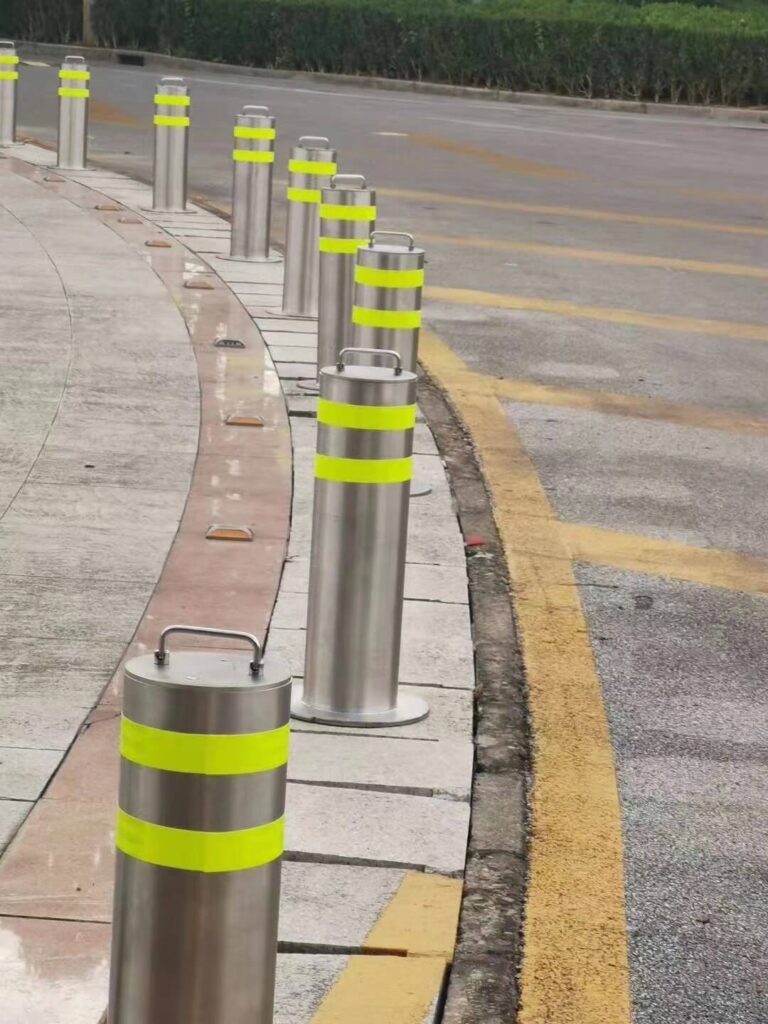
Understanding the Regulations on the Spacing of Bollards

“Spacing of bollards” is key to safety and accessibility, with typical spacing between 3 to 5 feet depending on use, such as vehicle control or pedestrian safety. Proper spacing also ensures ADA compliance and adapts to site conditions while meeting local regulations for effective installation.
Bollard Installation Specifications: What You Need to Know

Bollard installation specifications ensure proper selection, placement, and installation to control traffic, protect pedestrians, and safeguard assets. Key elements include substrate type, foundation depth, spacing for ADA compliance, and adherence to local codes for optimal safety and functionality.
What is the Minimum Bollard Height for Effective Security?

Bollard height is critical for safety and security, affecting vehicle deterrence, regulatory compliance, and visibility. Proper height selection is vital across urban areas, high-security zones, and public spaces to ensure effective protection and aesthetic integration.
How to Install Bollards: A Comprehensive Guide

Introduction to Bollard Installation Bollards are essential components in urban design and safety. These sturdy, vertical posts serve various purposes, from protecting pedestrians to guiding traffic and securing sensitive areas.Whether used in parking lots, sidewalks, or in front of buildings, bollards play a crucial role in enhancing safety and security. Understanding how to install bollards […]
Types of Bollards: A Comprehensive Guide

Types of bollards include fixed, removable, retractable, decorative, and specialized options. They serve purposes such as security, traffic control, and enhancing aesthetics. Each type is tailored for specific applications, from permanent barriers to flexible access solutions.
Para que são utilizados os pilaretes?
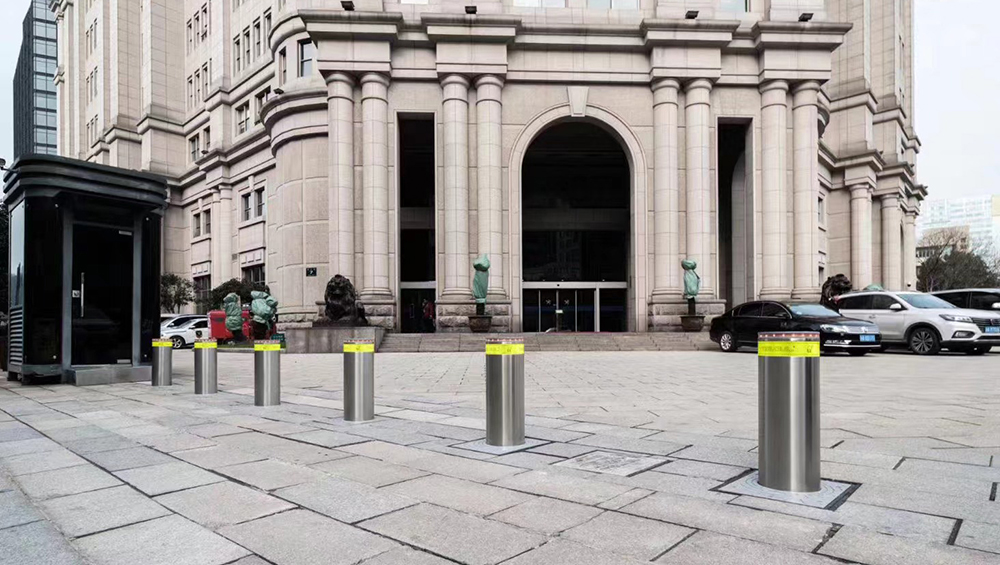
Bollards are short, sturdy posts used to manage traffic, enhance security, and beautify public spaces. They guide vehicles, protect pedestrians, secure properties from vehicle-ramming attacks, and add decorative elements to environments. They are found in urban areas, commercial properties, and pedestrian zones.