Introdução
In the contemporary landscape of perimeter security and hostile vehicle mitigation (HVM), the selection of the right physical barrier is no longer a matter of simple obstruction. It has evolved into a sophisticated engineering decision based on threat assessment, kinetic energy calculations, and operational requirements. For security architects and facility managers, the choice often narrows down to two primary active systems: the Tire Killer and the Traditional Road Blocker.
While both systems serve the overarching goal of preventing unauthorized vehicle entry, they operate on fundamentally different mechanical principles and are designed to mitigate different types of threats. This article provides a comprehensive technical analysis of these two systems, exploring their engineering nuances, performance benchmarks, and strategic applications in high-security environments.
Defining the Engineering Paradigms
The Tire Killer: Precision Disablement
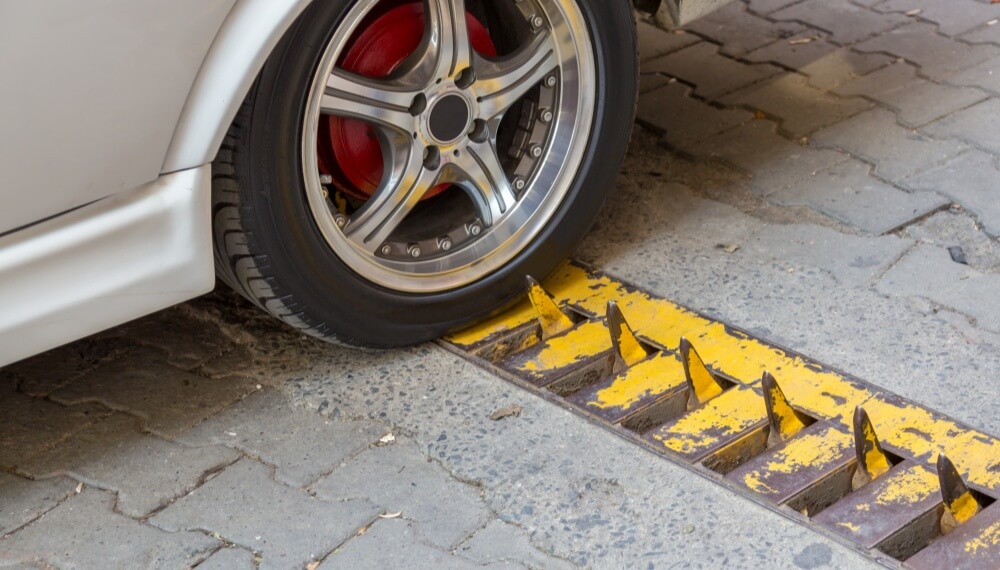
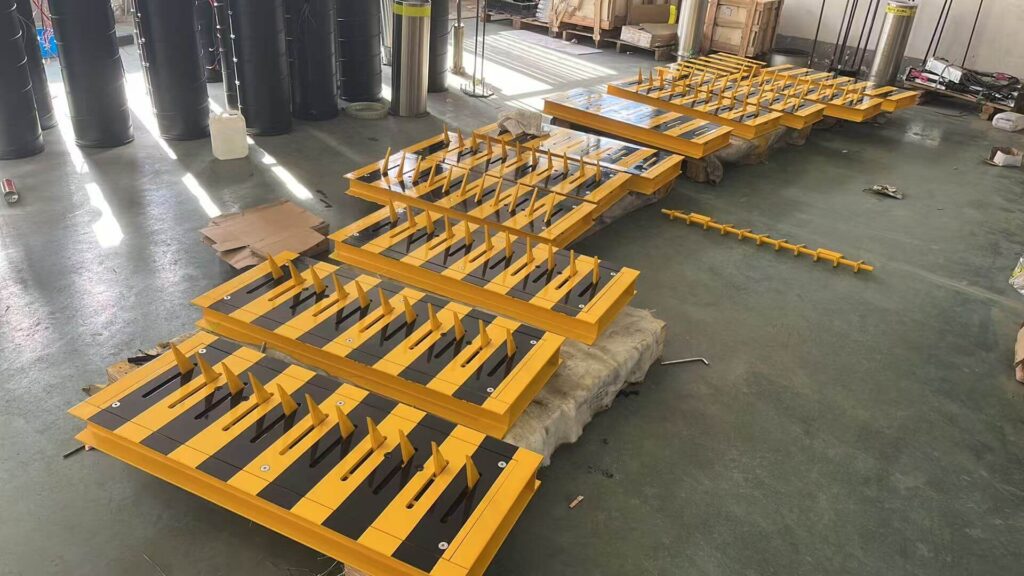
A tire killer is an active security device characterized by a series of high-strength steel spikes or blades. Its primary engineering objective is the disablement of vehicle mobility. By puncturing and shredding the tires—and in some high-spec models, damaging the axle—the tire killer removes the vehicle’s ability to maintain controlled movement or high-speed navigation.
Modern tire killers are categorized into three main types based on their drive mechanisms: 1. Hydraulic Tire Killers: Utilizing pressurized fluid for rapid deployment and high duty cycles. 2. Electromechanical Tire Killers: Powered by electric motors and gearboxes, offering a cleaner, oil-free alternative. 3. Manual/Spring-Loaded Tire Killers: Often used for one-way traffic control where the weight of the vehicle in the “correct” direction depresses the spikes.
The Traditional Road Blocker: Momentum Neutralization
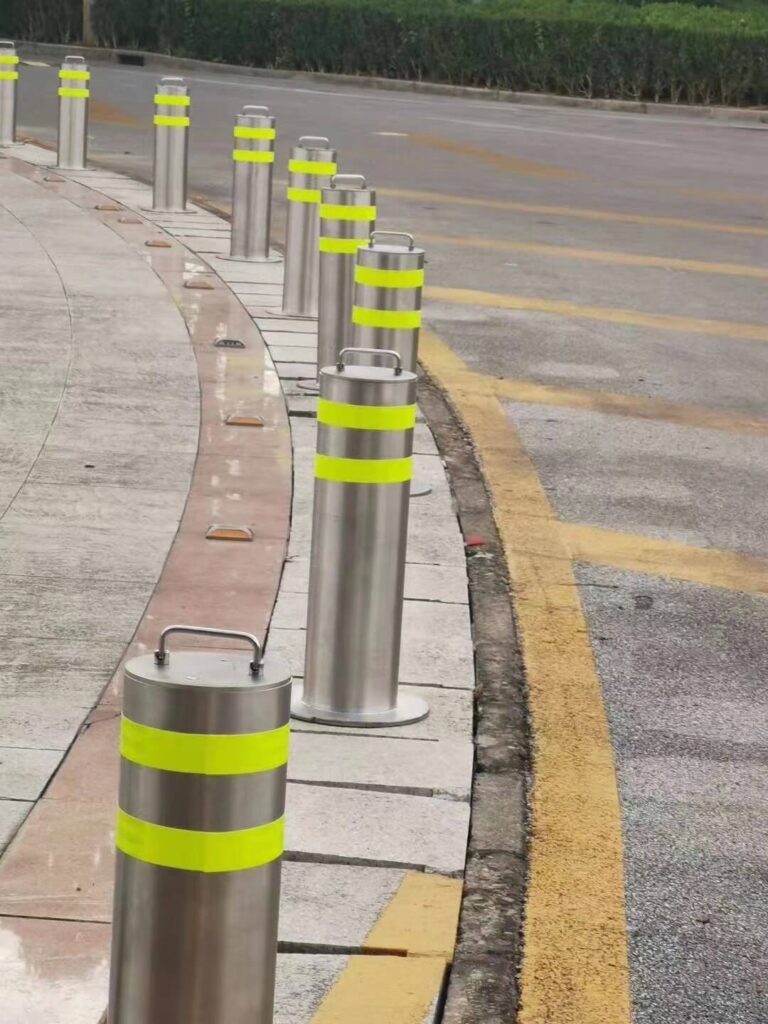
In contrast, a traditional road blocker (or rising curb) is a heavy-duty steel wedge or plate that rises from the ground to create a physical wall. Its primary objective is the neutralization of kinetic energy. Unlike the tire killer, which targets the wheels, the road blocker is designed to absorb the full impact of a vehicle, stopping its momentum entirely, even if the driver attempts a high-speed ramming attack.
Road blockers are typically heavy-set structures, often reaching heights of 600mm to 1000mm when fully deployed, and are almost exclusively hydraulic or high-torque electromechanical systems due to the mass of the blocking element.
Kinetic Energy and Crash Ratings: The Technical Divide
The most significant technical distinction between these two systems lies in their impact resistance. This is where professional security standards such as PAS 68 (UK), IWA 14-1 (International), and ASTM F2656 (US) come into play.
Road Blockers and Impact Certification
Traditional road blockers are frequently designed and tested to meet specific crash ratings. For instance, a K12 or M50 rated road blocker is certified to stop a 7,500kg truck traveling at 80km/h (50mph) with zero or minimal penetration. The engineering behind these blockers involves deep-foundation reinforcement and high-tensile steel alloys capable of transferring massive amounts of kinetic energy into the surrounding civil works.
| Specification | Typical Road Blocker (Crash-Rated) |
| Primary Goal | Stop vehicle momentum (Dead stop) |
| Foundation Depth | 800mm – 1500mm |
| Impact Resistance | Up to 2,000,000 Joules |
| Typical Height | 650mm – 1000mm |
Tire Killers: The “Soft” Deterrent
Tire killers are generally not crash-rated in the same manner. While they are incredibly effective at stopping a vehicle eventually, they do not provide an immediate “dead stop” for a heavy vehicle at high speed. A truck with shredded tires can still travel several meters or even tens of meters due to its existing momentum.
However, from a professional viewpoint, the lack of a crash rating does not make the tire killer “inferior.” Instead, it makes it a specialized tool. In scenarios where the threat is unauthorized entry (e.g., a car trying to sneak into a parking lot) rather than a suicide ramming attack, the tire killer is often the more efficient and cost-effective choice.
Mechanical Mechanics: How They Work
The Anatomy of a Spike Event
When a vehicle attempts to bypass a raised tire killer, the interaction is one of surgical destruction. The spikes are typically angled at 45 to 60 degrees toward the oncoming threat. As the tire makes contact: * Penetration: The sharp tip of the spike pierces the rubber tread. * Air Discharge: Many professional-grade spikes are hollow or “V-shaped” to ensure rapid air loss, preventing the tire from maintaining any structural integrity. * Axle Engagement: In some heavy-duty models, the spikes are long enough to engage with the vehicle’s undercarriage or axle, providing a secondary mechanical resistance.
The Physics of the Wedge
A road blocker operates as a massive inclined plane. When a vehicle strikes it: * Energy Transfer: The force is distributed across the front face of the blocker and transferred down into the support frame and the concrete foundation. * Vehicle Lift: The wedge shape often causes the front of the vehicle to lift, further dissipating energy and destroying the engine block and steering rack, ensuring the vehicle is completely immobilized.
Operational Considerations: Speed, Duty Cycle, and Maintenance
Deployment Speed
In security, seconds matter. * Tire Killers: Due to the lower mass of the spike assembly, tire killers can often be raised or lowered in 1.0 to 2.0 seconds. This makes them ideal for high-traffic areas where throughput is a priority. * Road Blockers: Moving a 2-meter wide steel wedge requires more power and time. Standard deployment is usually 3.0 to 5.0 seconds, though many high-security models feature an Emergency Fast Raise (EFR) system that can deploy the blocker in under 1.5 seconds using an accumulator.
Duty Cycle and Reliability
The “Duty Cycle” refers to how many times the system can operate per hour or day without overheating or failing. * Hydraulic Systems: Both tire killers and road blockers using hydraulic power are capable of 100% duty cycles (continuous operation). * Maintenance: Tire killers generally require less intensive maintenance than crash-rated road blockers. However, they are more susceptible to debris. Small stones or trash can become lodged in the spike housing, preventing full retraction. Road blockers, being larger, are less affected by small debris but require regular checks on the hydraulic seals and structural integrity of the hinge points.
Civil Engineering and Installation: The Hidden Costs
A common oversight in B2B procurement is focusing solely on the unit price while ignoring the civil works.
Foundation Requirements
- Road Blockers: A crash-rated road blocker requires a massive concrete pit. This often involves significant excavation, steel reinforcement (rebar), and specialized drainage systems. In some urban environments, underground utilities (gas, water, fiber) make the installation of a deep-foundation road blocker impossible.
- Tire Killers: These systems are available in surface-mount ou shallow-mount configurations. A surface-mount tire killer can be bolted directly onto an existing concrete slab, making it an ideal solution for temporary sites or locations where excavation is prohibited. Even in-ground tire killers typically require much shallower pits (200mm to 400mm) compared to road blockers.
The Critical Role of Drainage
From a manufacturer’s perspective, drainage is the single most frequent cause of system failure. Because both devices are installed at or below ground level, they act as natural sumps for rainwater. * Viewpoint: A professional installation must include a gravity-fed drain or an integrated sump pump. Without proper drainage, water ingress will lead to corrosion of mechanical parts, failure of limit switches, and potential short-circuiting of electrical components. In cold climates, standing water can freeze, physically locking the spikes or blocker in place.
Strategic Deployment: Choosing the Right Tool for the Risk
Professional security is built on the “Defense in Depth” principle. Understanding where each system fits into this architecture is key.
Use Cases for Tire Killers
- Directional Control: Preventing “wrong-way” entry in car parks, rental car returns, or one-way streets.
- Medium-Security Checkpoints: Where the goal is to deter unauthorized vehicles (e.g., residential compounds, industrial warehouses, or commercial office parks).
- Space-Constrained Sites: Where deep excavation for a road blocker is not feasible.
Use Cases for Traditional Road Blockers
- High-Value Assets: Embassies, government buildings, and military installations.
- Critical Infrastructure: Power plants, water treatment facilities, and data centers.
- Anti-Terrorism: Locations where the threat of a Vehicle Borne Improvised Explosive Device (VBIED) is a realistic concern.
The Interlocking “Air-Lock” Strategy
A sophisticated B2B security solution often combines these tools. A common configuration is the Interlocking Barrier System: * A Boom Barrier (Arm Gate) handles routine traffic management. * A Tire Killer ou Road Blocker remains in the raised position as the “hard” enforcement. * The system logic ensures the hard barrier only lowers after the vehicle has been cleared by security and the boom barrier has opened. This prevents accidental damage to authorized vehicles while ensuring a robust defense against intruders.
The Professional Viewpoint: Quality Beyond the Surface
When evaluating these systems, it is essential to look beyond the steel and paint. As a manufacturer, we emphasize several technical factors that define a “professional” grade product:
Material Science
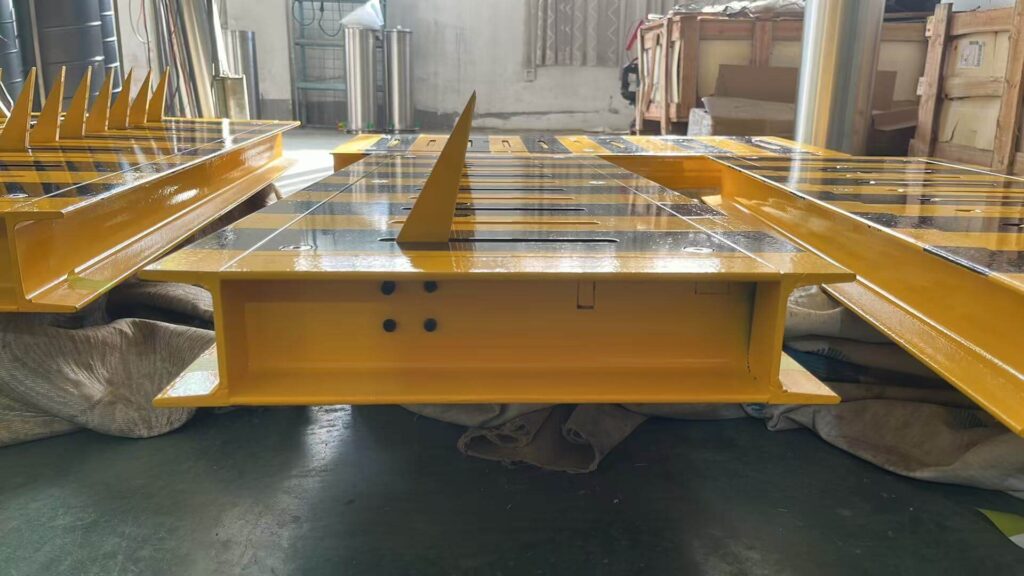
The spikes of a tire killer should be manufactured from high-tensile carbon steel ou stainless steel with a thickness of at least 10mm to 20mm. They must be heat-treated to ensure they don’t bend or shear off when a heavy truck passes over them. Similarly, the top plate of a road blocker must be slip-resistant (usually checkered plate) and capable of supporting the static axle loads of the heaviest commercial vehicles (often rated up to 40-80 tons).
Control Systems and Integration
A modern security barrier should not be a “dumb” piece of iron. It must integrate seamlessly with: * ANPR (Automatic Number Plate Recognition): For automated access of whitelisted vehicles. * Loop Detectors: Magnetic sensors in the road that prevent the barrier from rising while a vehicle is on top of it (a critical safety feature). * UVSS (Under-Vehicle Surveillance Systems): To scan for threats while the vehicle is stopped at the barrier. * PLC (Programmable Logic Controllers): Allowing for customized operational logic, such as “Emergency Fast Raise” or integration with fire alarm systems for emergency egress.
Total Cost of Ownership (TCO)
While the initial purchase price is a factor, B2B decision-makers must consider the Total Cost of Ownership. * Tire Killers typically have a lower TCO due to easier installation and lower power consumption. * Road Blockers have a higher TCO but provide a level of security and insurance compliance that tire killers cannot match in high-risk zones.
Regular maintenance—checking hydraulic fluid levels, lubricating pivot points, and clearing drainage—can extend the life of these systems to 10-15 years, making them a highly durable investment in facility safety.
Future Trends: The Rise of Smart Barriers
The industry is moving toward IoT-enabled perimeter security. Future tire killers and road blockers will feature: * Remote Diagnostics: Real-time monitoring of motor temperature, cycle counts, and hydraulic pressure. * Predictive Maintenance: Algorithms that alert facility managers to potential issues before a failure occurs. * Cloud Integration: Allowing global security operations centers (GSOC) to monitor and control entry points across multiple continents from a single dashboard.
Conclusão
The choice between a tire killer and a traditional road blocker is not about which is “better,” but which is appropriate for the specific risk profile of the site.
The Tire Killer is a surgical, high-deterrence tool designed for disablement and directional control. It offers speed, ease of installation, and cost-effectiveness for medium-security applications.
The Traditional Road Blocker is a blunt-force instrument of momentum neutralization. It is the gold standard for high-security environments where the physical stoppage of a determined attacker is the only acceptable outcome.
For the modern B2B security professional, understanding these technical differences is the first step in building a perimeter that is not just a fence, but a sophisticated, active defense system. By prioritizing engineering quality, proper installation (especially drainage), and strategic integration, facilities can ensure they are protected against the evolving threats of the 21st century.