
The Silent Revolution of Urban Intelligence
The modern metropolis is undergoing a profound transformation that transcends the mere addition of digital layers to physical structures. For decades, urban planning followed a philosophy of functional silos: lamp posts provided light, benches offered rest, and parking meters collected revenue. However, as cities grapple with unprecedented density and the urgent need for sustainable mobility, this fragmented approach is reaching its limits. We are entering an era of “Urban Intelligence,” where the distinction between infrastructure and service begins to blur. At the heart of this shift is the integration of smart parking systems with street furniture—a synergy that represents a fundamental rethink of how we utilize the most valuable real-time asset in any city: the curb.
This integration is not merely a technical convenience; it is a strategic response to the “Cluttered Curb” syndrome. Traditional streetscapes are often marred by a chaotic assembly of signs, bollards, and disparate hardware, each serving a single purpose. By embedding parking intelligence directly into the objects that already populate our sidewalks, we move toward a more cohesive, efficient, and aesthetically pleasing urban environment. This article explores how the convergence of smart parking and street furniture is creating a new “nerve center” for the city, driving economic value and enhancing the quality of urban life without the noise of traditional marketing-driven solutions.

The Context: The “Cluttered Curb” and the Need for Consolidation
Walk down any major thoroughfare today, and you will see the remnants of decades of incremental infrastructure growth. Parking meters stand next to signposts, which compete for space with trash bins and utility boxes. This physical clutter is a symptom of a deeper systemic inefficiency. In many cities, up to 30% of traffic congestion is caused by drivers searching for parking, a phenomenon that not only wastes time but also significantly increases carbon emissions and local air pollution. The traditional solution—adding more signs or standalone sensors—often adds to the visual noise without solving the underlying data gap.
The need for consolidation is driven by both space and data. In the dense urban core, every square inch of sidewalk is contested. Municipalities are increasingly looking for ways to “de-clutter” the streetscape while simultaneously increasing its functionality. This is where the concept of multi-functional street furniture becomes revolutionary. Instead of a standalone parking sensor embedded in the asphalt—which is difficult to maintain and provides only binary occupancy data—why not leverage the existing vertical infrastructure? A lamp post or a bus shelter already has a power source, a structural foundation, and a prime vantage point. By integrating parking management into these existing assets, cities can achieve a “hidden” infrastructure that works tirelessly in the background, providing a seamless experience for the driver and a cleaner environment for the pedestrian.
The economic cost of fragmented infrastructure is also becoming harder to ignore. Maintaining dozens of different types of hardware from multiple vendors leads to high operational expenses and data silos. When parking data is isolated from lighting data, and both are disconnected from transit information, the city loses the ability to perform holistic urban management. Integration allows for a shared communication backbone, reducing the total cost of ownership and enabling a more agile response to the changing needs of the urban population. ## Core Concept: Street Furniture as the “Nerve Center” of Parking
The integration of smart parking into street furniture transforms passive objects into active participants in the urban ecosystem. This evolution is best exemplified by the transformation of the humble lamp post. No longer just a source of illumination, the “Smart Pole” has become the Swiss Army knife of urban infrastructure. By mounting high-definition cameras or computer-vision-enabled sensors atop these poles, cities can monitor multiple parking bays simultaneously with far greater accuracy than ground-based sensors. These systems do more than just detect a vehicle; they can categorize vehicle types, identify delivery zones, and even detect illegal double-parking in real-time.
Furthermore, the integration of Electric Vehicle (EV) charging into lamp posts solves one of the greatest hurdles to urban EV adoption: the lack of residential curbside charging. By utilizing the existing electrical capacity of the street lighting network, cities can provide convenient charging points without digging up sidewalks to install bulky standalone chargers. This synergy creates a natural link between parking and energy management. A driver can locate an available spot, reserve it, and initiate a charging session—all facilitated by a single piece of integrated street furniture. This is the essence of a “frictionless” city, where technology serves the user’s needs without demanding their attention.
Beyond lamp posts, smart benches and transit shelters are playing an increasingly vital role in the parking narrative. Imagine a bus shelter equipped with low-power E-ink displays that provide real-time parking availability for the next three blocks. This information is not just for drivers; it helps manage the flow of delivery vehicles and ride-sharing services, reducing the time they spend idling in traffic. These “citizen kiosks” can also serve as payment interfaces, allowing users to settle parking fees or top up transit cards through a unified, tactile interface. By placing these services within the furniture that people already use, we normalize the technology and make it an accessible part of the daily routine.
| Integrated Asset | Primary Parking Function | Secondary Urban Benefit |
| Smart Lamp Posts | Multi-bay occupancy detection & EV charging | Adaptive lighting & 5G small cell hosting |
| Transit Shelters | Real-time availability displays & payment hubs | Improved passenger experience & ad revenue |
| Smart Benches | Environmental sensing & micro-mobility docks | Public Wi-Fi & device charging |
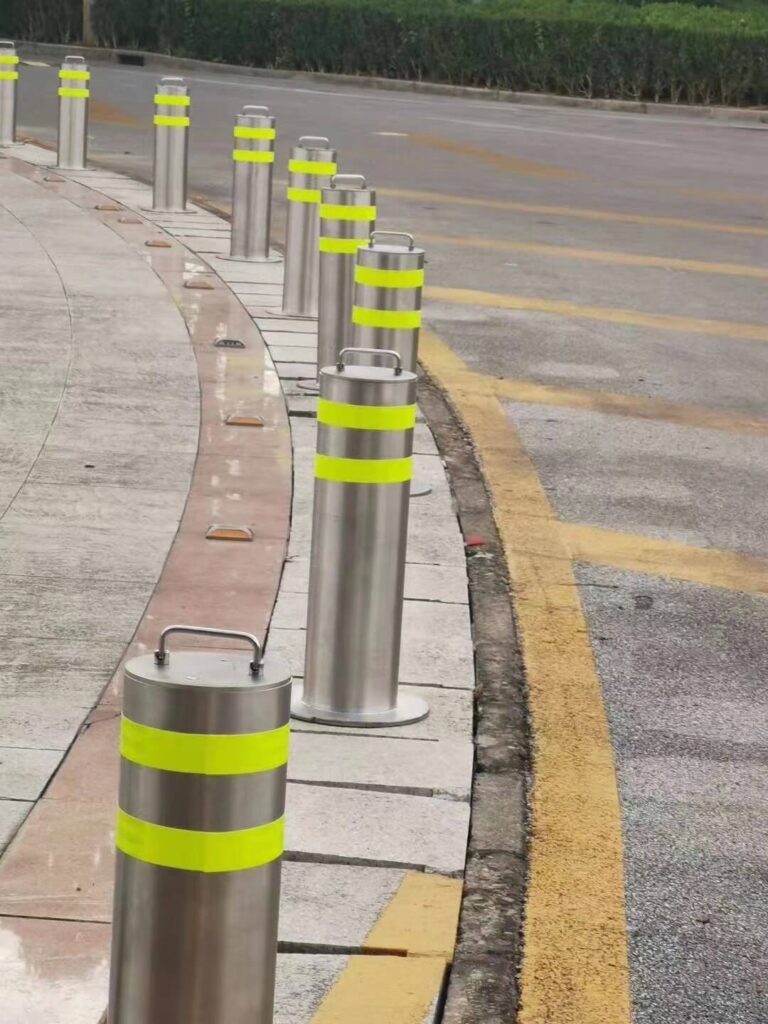
| Dissuasores | Dynamic access control for loading zones | Physical security & pedestrian safety |

Technical Synergy: The IoT Backbone
The “magic” of this integration lies in the invisible layers of connectivity and data processing that reside within the furniture. The transition from 4G to 5G and the rise of Low-Power Wide-Area Networks (LoRaWAN) have enabled a level of device density that was previously impossible. In an integrated system, each piece of street furniture acts as an edge computing node. Instead of sending raw video feeds to a central server—which would be costly and raise significant privacy concerns—the furniture itself can process the data locally. It identifies that a parking space is occupied and only sends that specific metadata to the cloud. This “intelligence at the edge” ensures low latency and high reliability, even in the most demanding urban environments.
Data interoperability is the second pillar of this technical synergy. For smart parking to be truly effective, it must communicate with the vehicle’s onboard systems and the driver’s mobile applications. Integrated street furniture serves as the bridge in this communication chain. By using standardized protocols, the data collected by a lamp post sensor can be instantly reflected in a city-wide parking app or an autonomous vehicle’s navigation system. This creates a “Live Map” of the city’s curbside, allowing for dynamic pricing models that adjust based on real-time demand. For example, during a major event, parking rates can increase to encourage the use of public transit, with the information clearly displayed on nearby smart signage.
Power management is another area where integration yields significant benefits. Many modern street furniture designs now incorporate high-efficiency solar panels into their surfaces—whether on the roof of a bus shelter or the top of a smart bench. This decentralized power generation can be used to run the parking sensors and communication modules, making the system more resilient and reducing the strain on the city’s electrical grid. In some cases, these systems can even feed excess power back into the grid, turning the streetscape into a distributed power plant. This holistic approach to energy and data is what defines a truly “smart” city. ## Beyond Utility: The Aesthetic and Social Impact
One of the most significant, yet often overlooked, benefits of integrating smart parking into street furniture is the preservation of urban aesthetics. The visual identity of a city is defined by its architecture and its public spaces. When these spaces are cluttered with utilitarian hardware, the “soul” of the city is diminished. Integrated design allows for “Invisible Infrastructure”—technology that performs its function without demanding to be seen. A sensor hidden within the sleek casing of a designer lamp post or a payment module embedded in a minimalist bench respects the historical and architectural context of the streetscape. This is particularly crucial for heritage districts where traditional parking meters and bulky signage would be an eyesore.
Socially, this integration fosters a more inclusive urban environment. Smart street furniture can be equipped with audio cues and haptic feedback to assist visually impaired drivers or pedestrians in navigating the parking environment. Furthermore, the data collected by these integrated systems can be used to ensure that designated parking for persons with disabilities is always available and not misused. By making the parking experience more predictable and accessible, we reduce the stress of urban travel for all citizens, regardless of their physical abilities. This moves the conversation from “efficiency” to “equity,” a vital shift for any modern municipality.
Strategic Insights: The Future of Urban Mobility
Looking toward the horizon, the integration of smart parking and street furniture is a precursor to the era of “Flexible Curb Use.” In the future, the curb will not be a static space for long-term parking; it will be a dynamic asset that changes its function throughout the day. In the morning, a section of the street might be a loading zone for delivery drones and vans; in the afternoon, it becomes a drop-off point for autonomous ride-sharing fleets; and in the evening, it transforms into outdoor seating for a local restaurant. Integrated street furniture, with its sensors and digital displays, is the only way to manage this complexity in real-time.
The role of Artificial Intelligence (AI) will be central to this evolution. By analyzing years of parking data collected through integrated furniture, AI models can predict parking demand with uncanny accuracy. This allows cities to implement “Predictive Parking,” where drivers are guided not just to where a spot is open now, but where one is likely to become available by the time they arrive. This eliminates the “circling the block” phenomenon entirely, drastically reducing urban congestion. Furthermore, as autonomous vehicles become more common, integrated street furniture will serve as “Digital Beacons,” providing the high-precision positioning data that these vehicles need to navigate and park safely in complex urban canyons.
Challenges and Considerations: A Balanced Perspective
While the benefits are compelling, the path to full integration is not without its hurdles. Data privacy remains a paramount concern. As we embed cameras and sensors into the public realm, cities must be transparent about what data is being collected and how it is being used. The principle of “Privacy by Design”—where data is anonymized at the source and never used for surveillance—must be the standard. Additionally, the longevity and maintenance of multi-functional hardware require a different approach than traditional infrastructure. A lamp post that also houses a 5G base station and a parking sensor is a complex piece of equipment that needs specialized care.
Standardization is another critical challenge. For the vision of a connected city to work, hardware from different manufacturers must be able to “talk” to each other. This requires open-source protocols and a commitment to interoperability from both the public and private sectors. Without these standards, cities risk being “locked in” to a single vendor’s ecosystem, which can stifle innovation and increase costs over the long term.
Conclusion: Building the City from the Ground Up
The integration of smart parking with street furniture represents a paradigm shift in urban management. It is a move away from the “bolt-on” technology of the past toward a “built-in” intelligence of the future. By leveraging the existing assets of our streets, we can create a mobility ecosystem that is more efficient, more sustainable, and more human-centric. The city of the future is not a place of more gadgets, but a place of more seamless experiences. It is a city where the infrastructure is invisible, the data is actionable, and the focus is firmly on the quality of life for its citizens. As we continue to redefine the urban nerve center, the synergy between parking and furniture will stand as a testament to the power of integrated thinking in solving the complex challenges of the 21st-century metropolis.